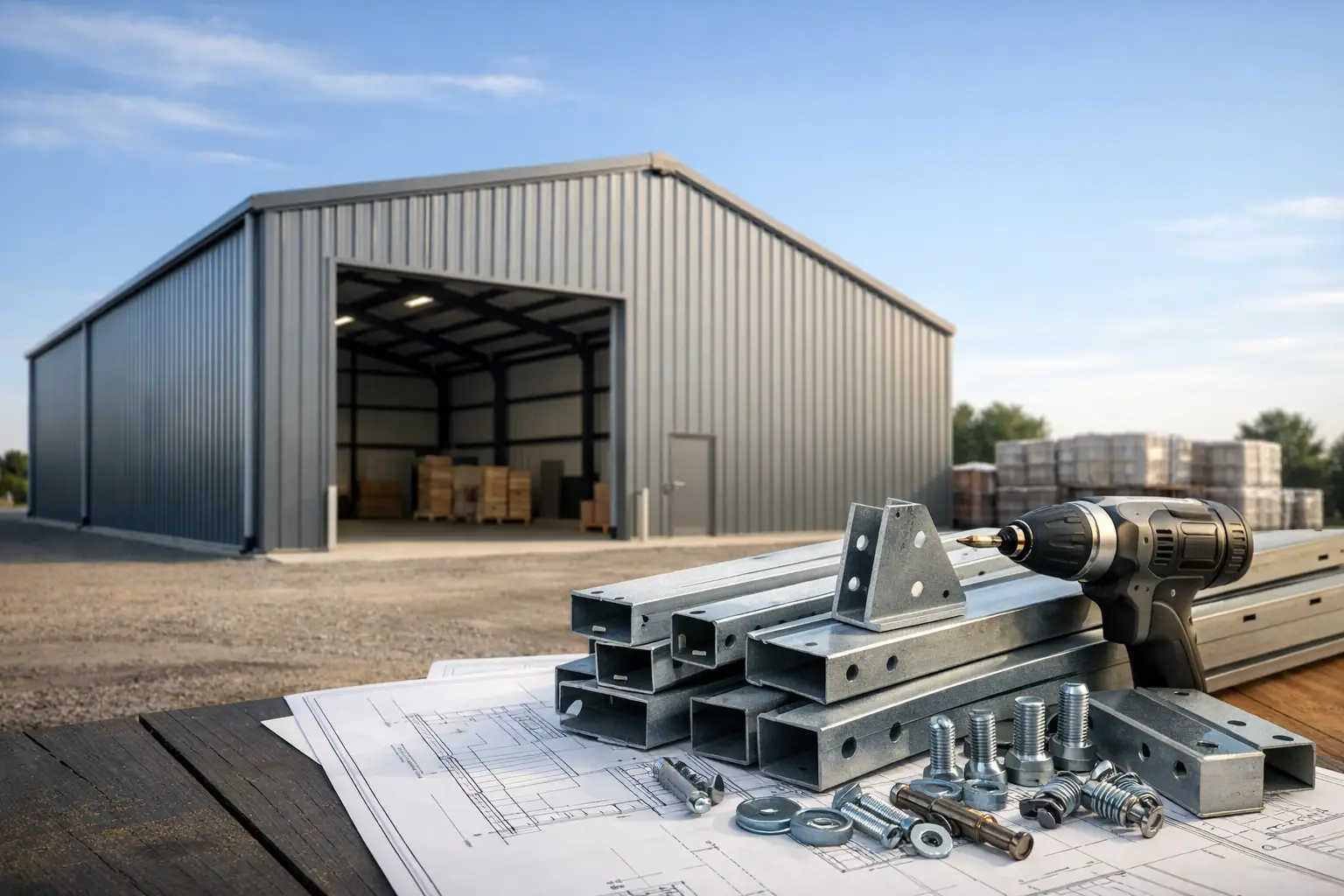
If you are pricing a warehouse, the wrong starting point can cost you months. A lot of buyers begin by chasing the cheapest quote on warehouse metal building kits, then find out later that the building was not designed around their use, site, loading needs, or local code requirements. That is where projects get sideways.
A warehouse is not just a shell with four walls and a roof. The right building has to match how you plan to use the space on day one and how you expect it to perform five or ten years from now. Storage-only buildings, distribution space, light manufacturing, equipment storage, and mixed-use commercial warehouses all ask different things from the frame, foundation, openings, insulation package, and interior layout.
What warehouse metal building kits actually include
In most cases, warehouse metal building kits are pre-engineered steel building packages designed for a specific footprint, wind exposure, snow load, and end use. The kit usually includes the primary steel frame, secondary framing, roof and wall panels, trim, fasteners, and engineered drawings tied to your project criteria.
What it does not always include is just as important. Foundations, slab work, erection labor, insulation installation, interior build-out, overhead doors, storefront systems, sprinklers, electrical, plumbing, and site work may or may not be part of the quote. Buyers get into trouble when they compare one supplier’s building-only price against another supplier’s more complete package without noticing the gap.
That is why the first real question is not, “How much is the kit?” It is, “What is included, and what still has to be bought, built, or coordinated?”
Why warehouse metal building kits are a strong fit
For the right project, steel warehouse systems solve a lot of practical problems. Clear-span designs can open up floor space for racking, pallet storage, vehicle movement, or equipment placement without a forest of interior columns. Expansion is usually easier to plan for than with many conventional structures. Lead times and erection timelines can also be more predictable when the building package is properly engineered upfront.
That said, not every warehouse should be designed the same way. A small business owner storing tools and inventory may need a very different setup than an investor developing a multi-tenant warehouse park. One may care most about upfront cost. The other may care more about long-term flexibility, tenant turnover, and how quickly each bay can be leased.
The advantage of pre-engineered steel is not just speed. It is the ability to tailor the building system around the actual job instead of forcing the job to fit a generic box.
The design decisions that affect price the most
Size matters, but it is only part of the price story. Width, length, and eave height all affect steel weight and panel quantities, but warehouse pricing moves just as much based on the design loads and building features.
Clear span versus interior columns
A clear-span warehouse gives you cleaner floor space and better flexibility for forklifts, shelving, and future layout changes. That usually means heavier framing as the width increases. In some cases, adding interior columns lowers the steel package cost, but it can create operational headaches later. If your business depends on open movement or high-density storage, the cheaper frame may cost more in lost function.
Door openings and loading access
Large overhead doors, dock-high openings, framed openings for future expansion, and truck circulation all need to be planned early. It is much easier to engineer the right openings into the package than to cut and rework the structure later. The same goes for door placement. A warehouse that works on paper can still fail in the field if trailers cannot back in cleanly or equipment flow gets pinched.
Roof pitch, insulation, and climate control
If the building is only cold storage for equipment, your insulation needs may be modest. If staff are working inside year-round, or if the space stores temperature-sensitive goods, that changes the roof and wall system, condensation control, and mechanical planning. Buyers often underestimate how much operating conditions affect the total package.
Code loads and location
A warehouse in one county may be designed for very different wind, snow, seismic, or exposure conditions than a warehouse in another. That is why low-price online estimates are often not reliable. Until the building is matched to your site and code requirements, the number is just a placeholder.
Planning the building around the operation
The best warehouse projects start with workflow, not steel. Before choosing dimensions, it helps to think through what moves in and out of the building, how often it moves, what equipment handles it, and whether the use may change over time.
For example, a warehouse used for bulk material storage may prioritize large open bays and high sidewalls. A warehouse for contractor inventory may need a mix of open floor area, secure storage rooms, and office space. A commercial flex warehouse might need storefront glass in front, warehouse doors in back, and a layout that can be split for multiple tenants.
This is where a lot of first-time buyers waste time. They shop building prices before they have nailed down the floor plan, opening sizes, or use case. Then every quote comes back different, and no one can tell which option is actually better. A clean scope saves time and usually gets you more accurate pricing.
Site work, foundation, and the costs buyers miss
The steel package is only one part of the total build. Site prep, grading, drainage, foundation design, concrete, utility runs, permitting, and local labor can move the total project cost more than the building kit itself.
A flat, accessible site with good soils is a different job than a sloped property that needs imported fill, retaining work, or stormwater improvements. The same warehouse kit can be affordable on one site and expensive on another because the dirt work and concrete package change the whole equation.
That is why experienced buyers look at total installed cost, not just the building number. If you only compare kit prices, you can end up solving the wrong problem.
How to compare warehouse metal building kits the right way
A good quote comparison starts with consistency. Each supplier should be pricing the same dimensions, loads, roof pitch, wall condition, insulation scope, openings, and accessories. If one quote includes framed openings, insulation, gutters, and engineer-stamped drawings while another does not, those are not equal numbers.
You also want to know who is responsible for what after the sale. Some providers sell the package and step out. Others help coordinate the engineering details, revisions, and builder handoff. That support matters when changes come up, because changes almost always come up.
This is where working with a single point of contact can save real time. Instead of chasing separate answers from a manufacturer, designer, and local builder, you can move the job forward with clearer accountability and fewer crossed wires. For buyers who are still sorting out floor plans, building system options, and contractor fit, that guidance is often worth more than squeezing a quote by a few points.
When turnkey support makes more sense than buying the kit alone
Some owners are comfortable managing the whole process themselves. If you already have a finalized plan, trusted trades, and a strong handle on local permitting, buying the kit and coordinating the rest may work fine.
But many warehouse buyers are not just purchasing steel. They are trying to line up the full path from concept to construction. That includes matching the building system to the use, confirming engineering criteria, checking package scope, and finding a contractor who can actually execute the job. That is where a consultative model makes sense, especially for out-of-area owners, investors, and first-time commercial builders.
Turn Key Building Finder works with buyers who want that process simplified. Instead of piecing together the project across disconnected vendors, you can get help narrowing the floor plan, sourcing the right engineered package, and connecting with contractors who fit the job.
Common mistakes to avoid before you order
The biggest mistake is buying on price alone. Right behind that is locking in dimensions before you understand your operational needs, site conditions, and code requirements.
Another common issue is underestimating future growth. If there is a strong chance you will add warehouse bays, loading doors, or office space later, it is smart to think about expansion during the initial design. Planning ahead does not always mean building bigger now. It means making sure today’s design does not block tomorrow’s options.
Finally, do not treat the building kit, slab, and contractor pricing as separate conversations for too long. They affect each other. Good coordination early usually leads to fewer revisions, fewer surprises, and cleaner numbers.
A warehouse project gets easier when the scope is clear and the team is aligned. If you start there, the steel package stops being a guessing game and starts becoming a tool that fits the job.