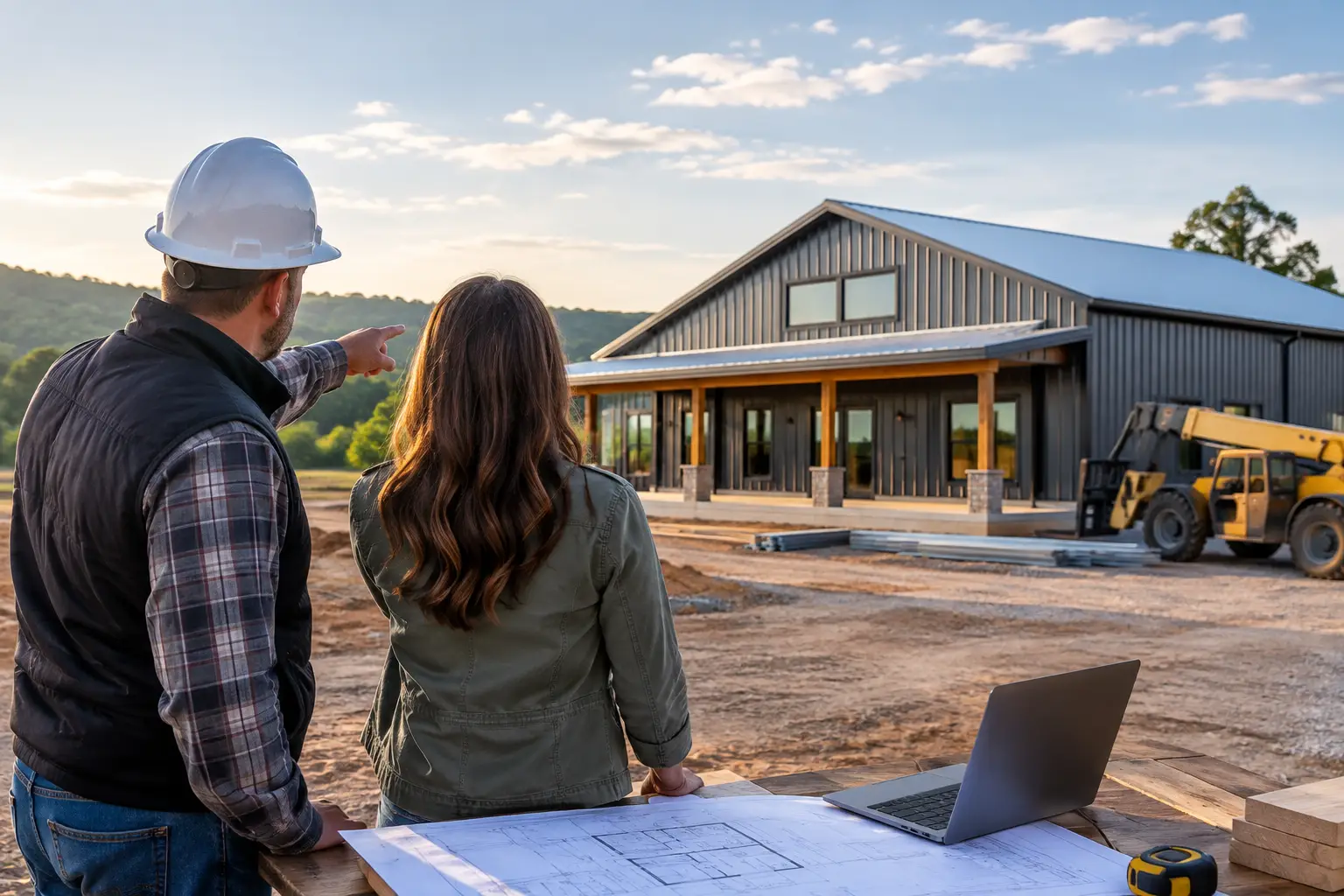
A barndominium can look straightforward on paper: a metal shell, a slab, and living space under one roof. The real work begins when you match the project, land, budget, and build scope with the right team. Homeowners searching for barndominium builders in Arkansas should start by defining what they need built before comparing prices. A low quote without a clear scope can become an expensive surprise once site work, utilities, concrete, or interior finish decisions begin.
Arkansas offers plenty of opportunities for rural homes, acreage builds, attached shops, and multi-use structures. It also brings practical variables that affect the build: sloped or wooded sites, drainage, soil conditions, long utility runs, and differing local permit requirements. The right contractor is not simply the one who says they build barndominiums. It is the one whose process and scope match your particular project.
Start With a Buildable Project Description
Before calling builders, get clear about the building you want and the work you expect the contractor to handle. A basic concept is enough to begin, but clearer information produces more useful conversations and more comparable quotes.
Know the approximate building size, number of stories, intended living area, shop or garage space, exterior finish preferences, and target timeline. If you have land, be ready to explain where it is located, whether there is road access, and what is known about power, water, septic, drainage, and topography. If you do not own land yet, say so. A contractor may still discuss the building side of the project, but site conditions can change the final budget significantly.
A finalized floor plan gives builders a stronger starting point. It helps them assess structural needs, slab dimensions, window and door openings, interior layout, and the relationship between conditioned living space and unfinished shop space. That does not mean every finish must be selected before you request a quote. It means the major decisions should be defined well enough that each builder is pricing the same general project.
What Arkansas Barndominium Builders May Include
The word “builder” can describe very different scopes of work. One company may supply and erect the metal building shell. Another may manage the full project from foundation through interior finishes. A general contractor may coordinate subcontractors while you separately purchase certain materials. None of these models is automatically better, but they should never be confused.
Ask each prospective contractor to explain, in plain language, what is included and what remains your responsibility. For a full build, the scope may include permitting support, site preparation, concrete, building erection, framing, insulation, mechanical systems, drywall, finishes, and final coordination. For a shell-focused project, the contractor may stop after the slab and exterior structure are complete.
Pay close attention to site work. Clearing trees, building a driveway, bringing in fill, grading for drainage, installing a septic system, drilling or connecting water, and extending electrical service can be separate costs. On rural Arkansas property, these items can have as much impact on the budget and schedule as the building package itself.
Compare Quotes by Scope, Not Just Price
A quote comparison works only when the details line up. If one proposal includes a turnkey interior and another covers only the shell, the lower number tells you very little. Ask for written proposals that identify major materials, labor, allowances, exclusions, payment terms, and expected sequencing.
Four areas deserve special attention:
- Foundation and concrete: Confirm slab size, thickness, reinforcement, site preparation assumptions, porches, patios, and any allowance for engineered requirements.
- Building shell: Ask about the framing system, roof and wall panels, insulation approach, windows, exterior doors, overhead doors, and installation labor.
- Interior completion: Clarify framing, plumbing, electrical, HVAC, drywall, paint, cabinets, flooring, fixtures, and trim. Allowances should identify the assumed product level.
- Site and utility work: Determine whether the proposal includes clearing, grading, drainage, driveway work, septic, water, electrical service, and utility trenching.
You should also ask how changes are handled. Barndominium projects often evolve after construction starts, especially when homeowners make finish selections or uncover site conditions. A professional proposal should explain how change orders are approved and priced before the extra work moves forward.
Questions to Ask Before Hiring a Builder
A good first conversation should be specific. Ask whether the contractor has completed projects with a similar mix of living space and shop or garage space, and whether they routinely manage the type of scope you need. Request examples of relevant work and ask how they coordinate concrete crews, metal-building installation, and interior trades.
Discuss schedule honestly. Material lead times, weather, inspections, site access, subcontractor scheduling, and owner selections all affect completion dates. A builder who gives a careful explanation of schedule dependencies is usually more useful than one who offers an overly simple promise.
It is also reasonable to ask for proof of appropriate insurance and to discuss how the contractor addresses local requirements for your location. Requirements can vary by county, city, project type, and site. Confirm who will be responsible for obtaining permits, arranging inspections, and providing any documents required for your build. Do not assume those tasks are included because they were mentioned during an early phone call.
Finally, ask who your main contact will be once work begins. On a project with multiple trades, communication can determine whether small questions get resolved quickly or turn into delays.
Arkansas Site Conditions Can Change the Plan
The building itself is only one part of the job. A level lot with established utilities may allow a more predictable path than raw acreage with heavy tree cover and uncertain drainage. On a sloped site, grading and water management need to be considered before the foundation is placed, not after a hard rain reveals a problem.
Soil and foundation needs should be evaluated for the actual site rather than copied from another project. Builders may rely on local experience, engineering input, or site-specific information depending on the project. This is one area where a homeowner should resist the temptation to compare builds by square-foot price alone.
Arkansas weather also makes building-envelope decisions worth discussing early. Ask how insulation, ventilation, moisture control, window placement, and mechanical design fit the intended use of the structure. A workshop that opens frequently has different comfort and efficiency needs than a fully conditioned living area. Separating or zoning those spaces may affect both upfront cost and long-term operation.
Prepare for Better Builder Conversations
You do not need to become a construction expert to request useful quotes. You do need to organize the information builders will use to evaluate the project. Share the same core details with every contractor so their responses can be compared fairly.
Useful information includes the property address or general area, photos of the site, a survey if available, the floor plan, approximate building dimensions, desired exterior style, target start date, and a realistic budget range. If you have already received utility, septic, or driveway estimates, provide those details too. They help a contractor identify gaps in the plan.
Be upfront if you plan to complete any work separately. Some owners handle landscaping, painting, fixture purchases, or portions of interior finish themselves. That can work when responsibilities are defined clearly, but it can also create scheduling issues if those decisions affect another trade. Discuss the handoff points before signing a contract.
Find the Right Fit, Not a One-Size-Fits-All Builder
The best builder for a simple shell-and-shop project may not be the best fit for a fully finished family home with detailed interior selections. Likewise, a contractor with experience on rural acreage may be especially valuable when access, drainage, and utilities are major concerns. Look for a fit between the contractor’s actual experience, your project scope, and the way both sides communicate.
Turnkey Floor Plans helps homeowners locate independent contractors through its Find a Turn Key Contractor resource. Use it as a starting point, then have direct conversations, request detailed proposals, and make your own hiring decision based on the work being offered.
For Arkansas Contractors Serving Barndominium Owners
Builders, general contractors, metal-building installers, concrete contractors, and shop or garage specialists can benefit from being visible where homeowners are actively planning projects. Clear service areas and an accurate description of your scope help homeowners reach out with better information and more realistic expectations.
Basic contractor listings in the Turnkey Floor Plans nationwide contractor network are free. Contractors serving Arkansas communities can use the free contractor signup form to list the areas they serve and the types of projects they handle. Accurate profiles help reduce wasted conversations and make it easier for homeowners to identify a contractor whose services match the job.
A barndominium build is easier to manage when the scope is clear before the first contract is signed. Bring builders the best information you have, ask direct questions about what is and is not included, and give site conditions the same attention you give the building design. That preparation creates a better path from acreage to a finished home, shop, or garage.
Leave a Reply