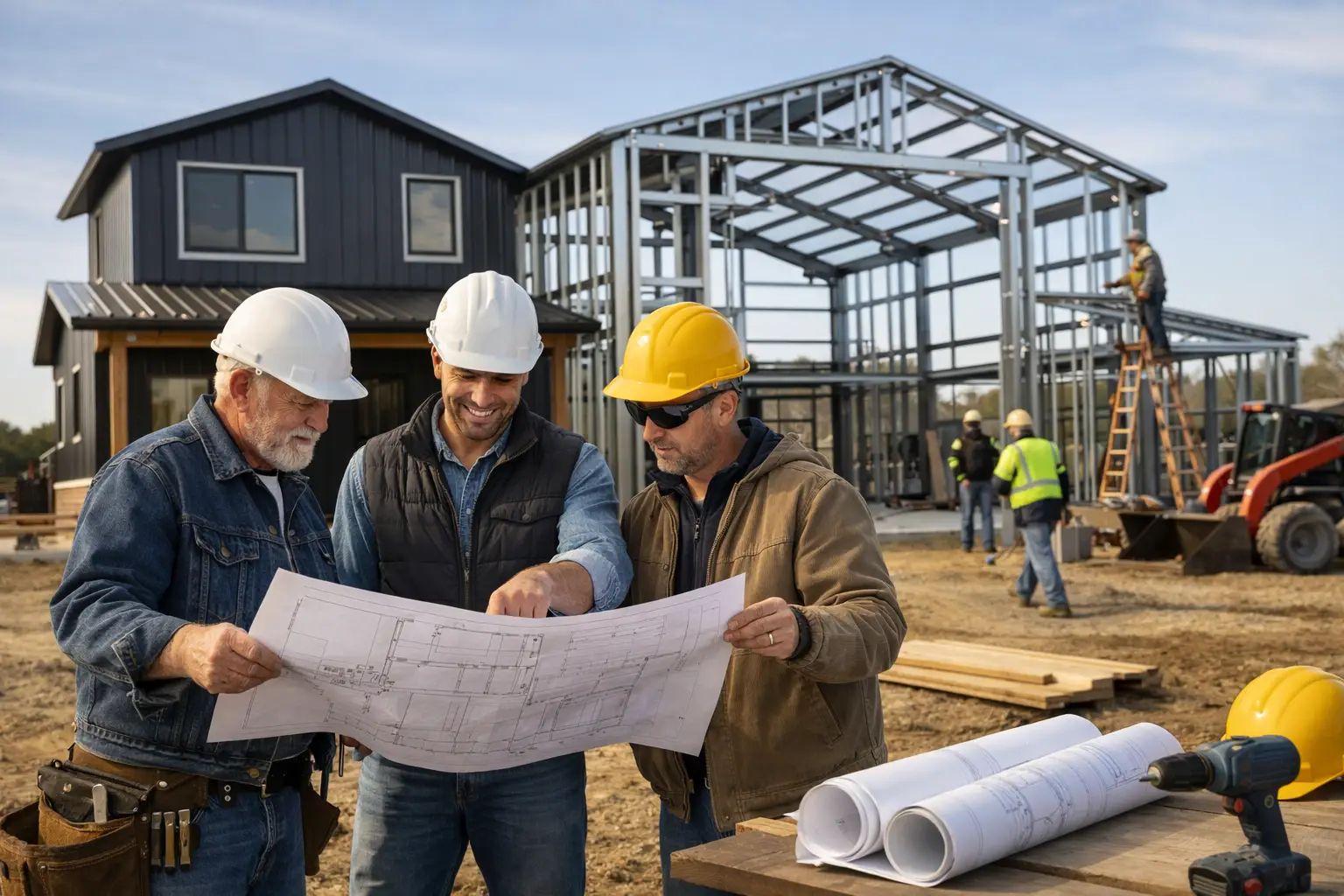
A barndominium project rarely starts with a finished set of answers. It starts with a landowner who has a vision, a rough budget, and a need for someone who understands metal buildings, residential finishes, site work, and the real sequence of construction. That is why barndominium contractors wanted is more than a search phrase. It reflects a practical need for better connections between serious homeowners and qualified independent builders.
For homeowners, the goal is not simply finding a name online. It is finding a contractor whose experience, service area, and project approach fit the build. For contractors, the opportunity is to be visible where people are actively planning barndominiums, shops with living space, garages, workshops, and other metal-building projects.
Why Barndominium Contractors Are in Demand
Barndominiums combine building systems that are often handled by different trades and suppliers. A project may involve land clearing, a foundation, a metal shell, framing, plumbing, electrical work, insulation, interior finishes, porches, driveways, and drainage. Some builders manage the entire job. Others focus on a defined portion of the work and coordinate with owners or general contractors.
That variety is exactly why homeowners need clear information before they request quotes. A contractor who is a good fit for erecting a pre-engineered metal building may not provide full interior build-out. A residential general contractor may be comfortable managing the finished home but may rely on a separate metal-building crew. Neither approach is automatically better. The right choice depends on the project, the site, the budget, and who will manage the moving parts.
Demand also varies by location. Rural counties may have builders with deep practical experience but limited online visibility. Fast-growing areas may have plenty of inquiries and tight construction schedules. A nationwide contractor network gives homeowners another place to begin their search while giving builders a way to describe what they actually build and where they work.
What Homeowners Should Prepare Before Contacting Contractors
The best contractor conversations begin before the first phone call. Homeowners do not need every material selected or every finish decided, but they should be able to explain the project clearly enough for a builder to determine whether it fits their work.
Start with the building purpose and general layout. Is the project primarily a residence, a shop with living quarters, a detached garage, or a workshop? Share the approximate square footage, number of stories, bedroom and bathroom count if applicable, porch plans, and any special spaces such as a large shop bay or equipment storage area. A finalized floor plan is especially useful because it gives contractors a clearer picture of the scope.
Land details matter just as much. Tell prospective contractors whether the property has road access, utilities nearby, known drainage concerns, a slope, trees to clear, or an existing driveway. These conditions can affect scheduling, equipment needs, foundation decisions, and total cost. They are not minor details to save for later.
Budget should be discussed honestly, even if it is a range. A quote based on a modest finish level will look very different from one that includes custom cabinets, extensive porches, upgraded windows, and a fully finished shop area. Being direct early helps both sides avoid wasting time on a project that is not aligned with expectations.
When using Find a Turn Key Contractor, homeowners can begin by looking for independent contractors that serve their state or nearby service area. The next step is still a direct conversation. Ask each contractor how they typically handle projects like yours, what parts of the job they manage, and what information they need to prepare an initial estimate.
Questions That Lead to Better Quotes
A quote is only as useful as the scope behind it. Two numbers can be far apart for perfectly valid reasons if one includes site work, concrete, shell erection, interior finishes, or coordination that the other excludes.
Ask contractors to explain the major work categories included in their pricing. You should understand whether the quote addresses the foundation, metal building package, erection, framing, insulation, mechanical systems, finish work, porches, and exterior access. If an item is not included, ask whether it is an owner responsibility, a separate bid, or something that can be added later.
It also helps to ask about the project schedule in practical terms. When can the contractor review the plans? What must happen before work can start? Are there long-lead materials or site conditions that could affect timing? A good answer does not need to be a promise of exact dates. It should show that the contractor understands the order of work and can explain the decisions that affect the schedule.
Finally, clarify communication. Know who will be your main contact, how change requests are handled, and when you should expect updates. Barndominium construction involves choices along the way. A clear communication process prevents small questions from becoming costly delays.
Barndominium Contractors Wanted: What Builders Should Share
Contractors do not need a polished marketing campaign to earn useful exposure. They need a clear, accurate listing that helps homeowners understand whether they are a fit. The most helpful profiles state the cities, counties, regions, or states served; the types of projects completed; and the role the contractor typically plays.
For example, a builder might specialize in complete barndominium construction, metal-building erection, shop and garage construction, concrete foundations, or interior build-outs. A homeowner can make a better first contact when those distinctions are visible from the start. General claims such as “we do everything” can create confusion if the contractor’s normal scope is more focused.
Service radius deserves special attention. Many contractors are willing to travel, but travel distance can affect mobilization, scheduling, and cost. Listing the areas you regularly serve helps bring in inquiries that are more realistic for your crew and business model.
Project details also help qualify conversations. Contractors can explain the building sizes they commonly handle, whether they work from customer-provided plans, and whether they coordinate with separate trades. This is not about making promises before a site review. It is about setting reasonable expectations before time is spent on calls and estimates.
Turnkey Floor Plans is expanding its nationwide contractor network across all 50 states. Basic contractor listings are FREE, giving independent builders a straightforward way to present their service areas and project specialties. Contractors looking for added visibility can use the FREE contractor signup form to be listed where they work.
Better Leads Start With Better Project Information
A contractor directory works best when both sides treat the first inquiry as the beginning of a construction conversation, not a request for an instant final price. Homeowners should send their location, plans or approximate layout, intended building use, and a short description of the site. Contractors should respond with the information needed to determine fit and explain their next step.
For homeowners, this approach creates more useful comparisons. Instead of collecting vague price ranges, you can compare scopes, communication styles, scheduling realities, and the contractor’s familiarity with projects like yours. For builders, it reduces the number of conversations that go nowhere because the project is outside the service area, does not match the crew’s work, or lacks the basics needed for an estimate.
There is no single correct way to build a barndominium. Some owners want one contractor coordinating the project from foundation through finishes. Others prefer to work with separate specialists. The best path is the one that matches the complexity of the build and is clearly understood by everyone involved.
A well-prepared homeowner and a clearly presented contractor profile make that first connection more productive. No guesswork. No wasted time. Just a better starting point for a build that deserves careful planning.
Leave a Reply