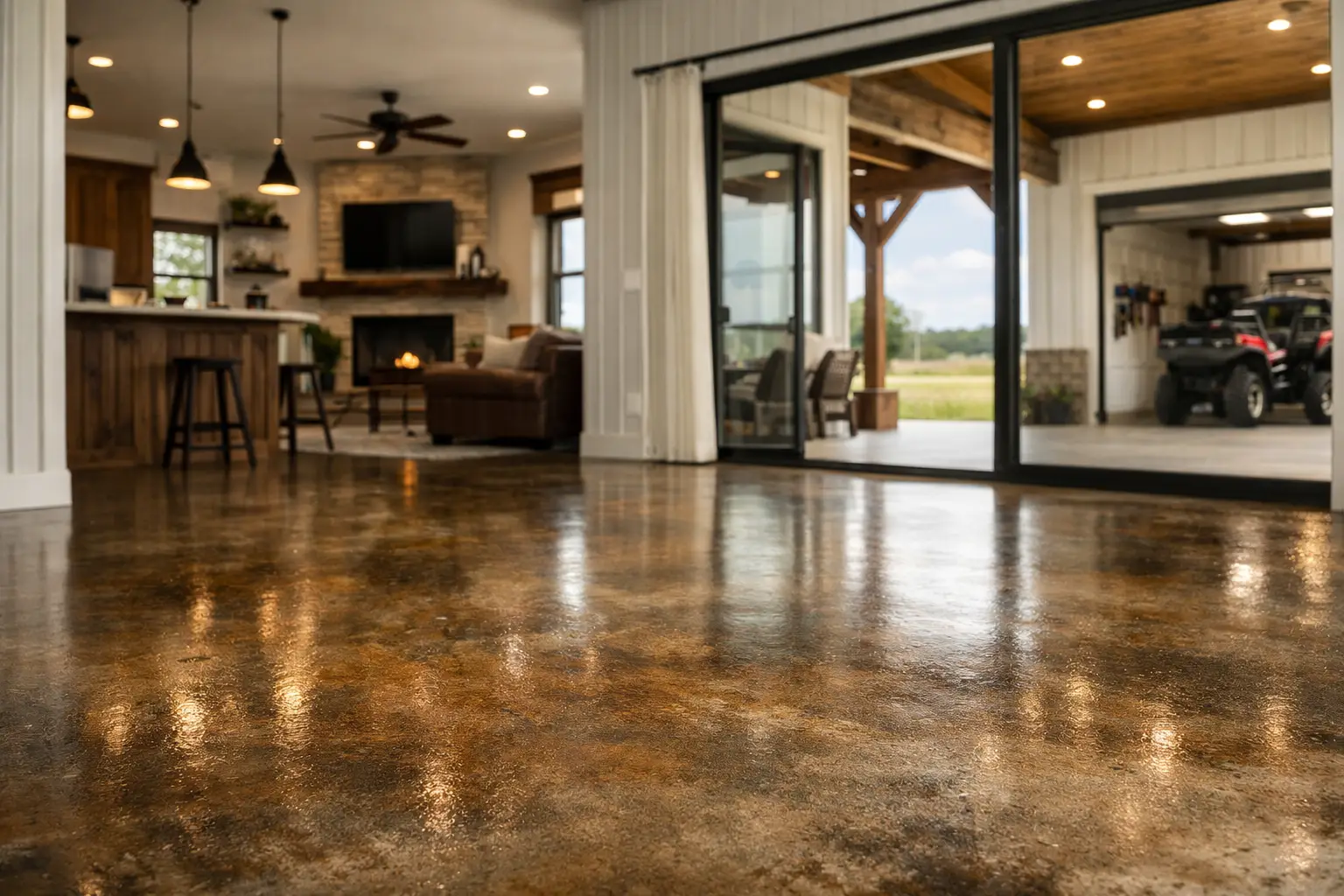
Are barndominium stained concrete floors a good choice for a new build? Yes, especially if you want a durable, easy-care surface that works with the open spaces and practical lifestyle many barndo owners want. The key is deciding on the finish before the slab is poured, because concrete quality, floor-plan details, and room use all affect the final result.
A stained concrete floor can look warm and high-end without adding another layer of flooring over your slab. It also makes sense for homes with muddy boots, pets, kids, workshops, large porches, and wide-open living areas. But it is not a zero-maintenance option, and it will not hide every mark or flaw in the concrete.
Why stained concrete works in a barndominium
A barndominium is built around practicality. Large living rooms, connected kitchens, attached garages, and shop areas call for materials that can handle real life. Stained concrete starts with the slab you already need, so it can reduce the number of finish materials your builder has to install.
It is a strong fit for Barndominium House Plans with open living, dining, and kitchen areas. Instead of transitions between wood, tile, and carpet, one continuous surface can make the home feel larger and easier to clean. Many homeowners choose a warm brown, charcoal, gray, or soft tan stain to complement metal siding, wood beams, black windows, or a modern farmhouse exterior.
The trade-off is comfort. Concrete is harder underfoot than vinyl or engineered wood, and it can feel cool in winter. Area rugs, cushioned mats at the sink, and thoughtful heating choices solve much of that concern, but they should be part of the plan rather than an afterthought.
Choose the floor-plan details before pouring the slab
The best time to plan a stained floor is when you are reviewing house plans and floor plans, not when the drywall is going up. Changes made before the pour are usually less expensive and produce a cleaner result.
Think about room flow and traffic
Open Concept House Plans are especially well suited to stained concrete because the finish can run from the entry through the great room and kitchen with few visual breaks. In a 3 Bedroom House Plan or 4 Bedroom House Plan, some families carry the stained finish into bedrooms for consistency, then add rugs for warmth. Others reserve it for common areas and use a quieter flooring material in sleeping spaces.

For 2 Bedroom House Plans designed for retirees, a continuous floor can be a practical choice with fewer height changes between rooms. For 5 Bedroom House Plans, consider how heavy family traffic, pets, and frequent guests will affect the color choice. Medium tones and variegated finishes generally hide dust and daily wear better than very dark or very light solid-looking floors.
Plan joints, drains, and transitions
Concrete control joints are necessary. They help direct cracking as the slab cures and moves, but they remain visible after staining. Ask your builder where joints will land in major rooms, especially in a large great room or long hallway. A joint that follows a logical line can look intentional. One that cuts awkwardly across a kitchen island area can be distracting.
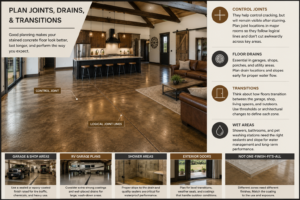
Also discuss floor drains, garage-to-home transitions, shower areas, and exterior doors early. Garage House Plans, RV Garage House Plans, and Shop House Plans often include zones with different drainage and coating needs. A decorative interior stain may not be the best finish for a work area exposed to tire traffic, oil, or frequent wet cleanup.
Protect the slab during construction
This is the part homeowners often miss. Stained concrete reveals the slab rather than covering it. Drywall mud, paint overspray, adhesive, grease, and deep scratches can all show through the finished floor.
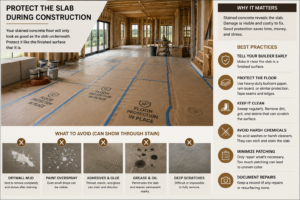
Tell your builder from the start that the slab will be a finished surface. Require protection during construction, avoid unnecessary patching, and keep a record of any repairs. No concrete slab is perfectly uniform, but clean preparation gives the stain contractor far more control over the result.
Acid stain vs. water-based stain
Both options can work well, but they create different looks. The right choice depends on whether you want natural variation or more predictable color.
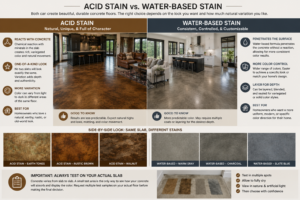
Acid stain reacts with minerals in the concrete, which creates movement and color variation. That character is exactly why many people love it. It can also be frustrating if you expect a perfectly even result, since one area of the slab may take color differently from another.
Water-based stains are often the better choice when you have a specific color direction for your Home Plans. They can create a more controlled look and may be layered for depth. Still, request a test sample on your actual slab. A sample board cannot accurately show how your concrete will absorb color.
What do stained concrete floors cost?
For new construction, a basic stained and sealed concrete floor often falls around $5 to $12 per square foot, while extensive grinding, repairs, detailed scoring, multiple colors, or premium coatings can push costs higher. Your location, slab condition, total square footage, and the installer’s process matter more than a single national price.

A large barndominium can sometimes receive a lower per-square-foot price than a smaller project because setup work is spread across more area. However, a simple square footprint is usually less expensive than a plan with many closets, hallways, angles, and room-by-room color changes.
When comparing bids, ask what is included. You want clarity on slab cleaning, patching, crack treatment, stain samples, sealer type, number of coats, and final cleanup. A low price can leave out the preparation that makes the finish last.
Common mistakes to avoid
The most expensive mistake is assuming a stained floor will look like a printed flooring sample. Concrete has natural variation, and a stained finish makes that variation part of the design. If you want perfectly uniform color, another flooring type may fit better.

Homeowners also make trouble by selecting a high-gloss sealer everywhere. Gloss can look impressive in photos, but it may show footprints and become slippery when wet. A satin finish, appropriate slip-resistant additive, and washable entry rugs are often smarter choices for family living.
Finally, do not treat every space the same. A kitchen, main living area, mudroom, and covered porch may work beautifully with stained concrete. A busy workshop bay or garage may need a more heavy-duty system chosen for that use.
Buying tips for your barndo plans
When comparing Barndo Plans, look beyond the exterior style. The best floor plan for stained concrete has logical room flow, clear transition points, and enough space for rugs and furniture to soften the larger rooms.

Wrap Around Porch House Plans can pair especially well with stained interiors because the porch-to-living connection feels natural, but choose weather-resistant outdoor concrete finishes separately. Mother-in-Law Suite House Plans may benefit from continuous flooring for easier cleaning and fewer transitions. For Texas Barndominium House Plans, consider solar exposure and cooling needs, since concrete can retain temperature from the slab and surrounding conditions.
If you are comparing Luxury House Plans with simpler Custom House Plans, remember that a stained slab can look upscale without elaborate patterns. Good lighting, a well-chosen stain color, and a floor plan that gives the finish room to breathe often matter more than decorative borders.
Frequently asked questions
Do stained concrete floors crack?
Concrete can crack, and staining will not prevent it. Proper control joints, a well-designed slab, and realistic expectations are the best defense. Small hairline cracks may blend into a variegated finish, while larger cracks may need repair that remains visible.
Are stained concrete floors slippery?
They can be if polished too smooth or coated with a glossy sealer. Your installer can recommend a slip-resistant additive for kitchens, entries, and other areas that may get wet.
Can you stain concrete after moving in?
Yes, but an empty new-construction slab is easier and less expensive to prepare. Existing floors may require removal of old coatings, adhesives, or contaminants before staining can begin.
Before finalizing your House Plans, decide whether you want the slab to be a structural element only or a visible part of your home’s design. When stained concrete is planned early, it can give your barndominium a durable, grounded finish that works as hard as the rest of the home.