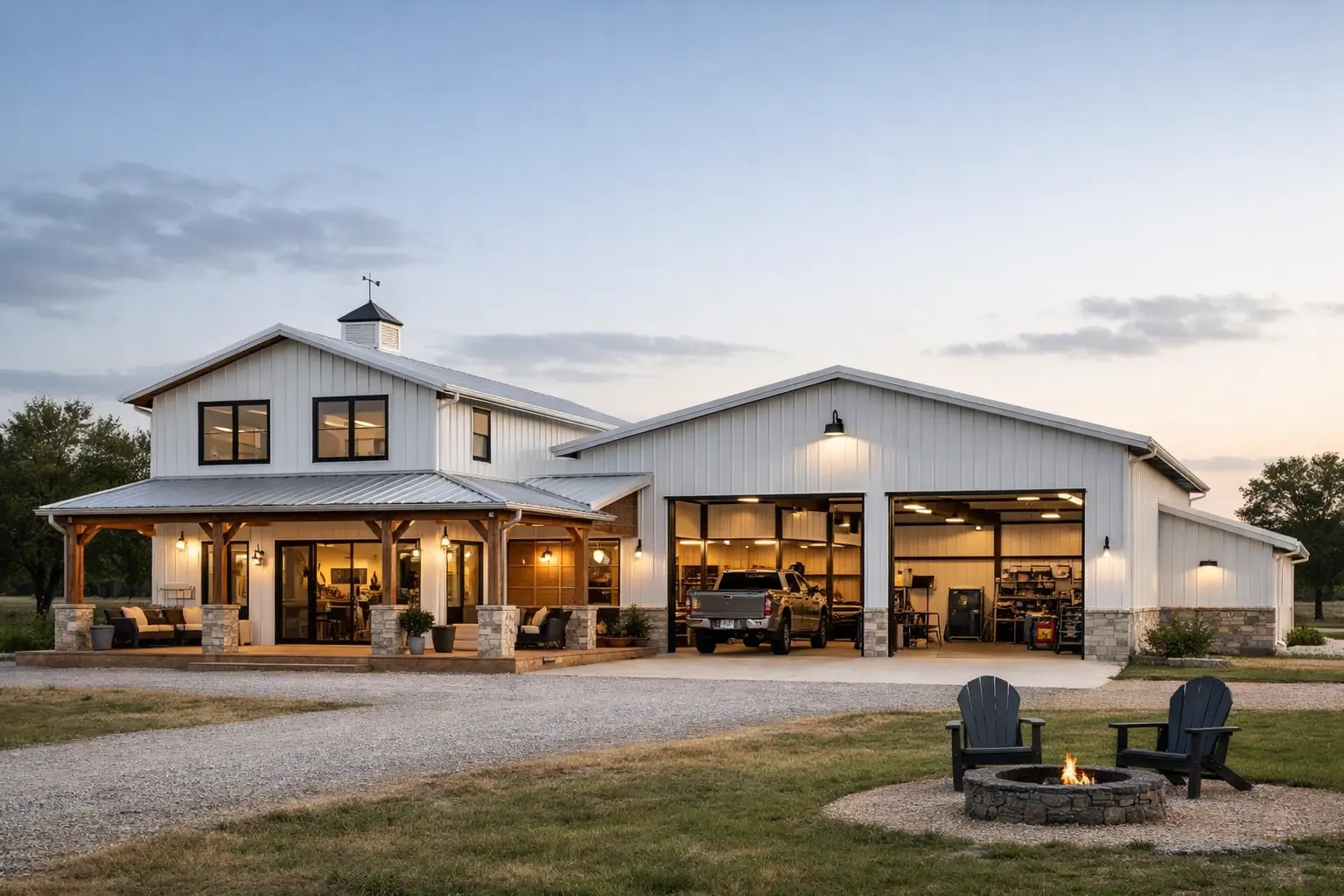
A shop house works best when the daily routine is obvious on paper. If the truck, tools, mudroom, kitchen, and bedrooms all fight each other, the build feels bigger and more expensive without actually living better. That is why the best shop house plan ideas start with circulation first, then square footage second.
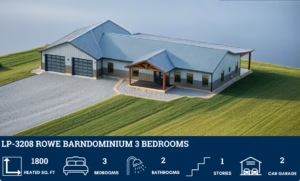
For most buyers, the right plan is not the one with the most dramatic exterior or the biggest shop. It is the one that lets work space and home space sit together without constant compromises. Whether you are comparing barndominium floor plans with shop space, looking at a shop house for a rural property, or trying to fit an RV garage into the layout, the smartest ideas are the ones that make everyday use easier.
Browse hundreds of barndominium floor plans for FREE:
👉 https://barndominiumplans.com/?ref=luke_divin
What makes the best shop house plan ideas practical
A good shop house plan solves three problems at once. It gives you enough shop depth and door clearance for the equipment you actually own, enough living space to feel like a real home, and enough separation between the two so noise, dust, and traffic do not spill into everything.
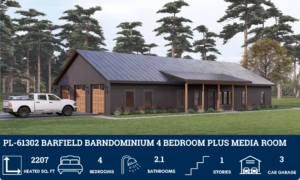
That balance matters more than chasing a certain bedroom count or style. A two-bedroom layout can feel generous if the common area is open and the shop connection is clean. A four-bedroom layout can feel cramped if the hallway is long, the utility room is undersized, and the shop entry lands right in the main living area.
The strongest plans usually share a few traits. They place the shop where vehicle access is simple. They use a mudroom, laundry room, or hallway as a buffer. They keep the kitchen and living area open, because closed-off rooms can make a metal building footprint feel tighter than it is. And they avoid wasting square footage on awkward circulation.
Browse hundreds of barndominium floor plans for FREE:
👉 https://barndominiumplans.com/?ref=luke_divin
1. Side-by-side living and shop layouts
This is one of the most dependable shop house plan ideas because it is easy to understand and easy to build. The living quarters sit on one side of the structure, and the shop sits on the other. A shared wall keeps the footprint efficient, while a buffer zone like a utility room or pantry helps control sound.
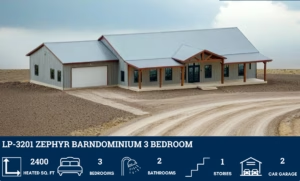
This layout is especially useful if you want a straightforward one-story design. It works well for buyers comparing 2-bedroom barndominium plans and 3-bedroom barndominium plans because the bedroom wing can stay private while the shop remains fully accessible.
The trade-off is width. A side-by-side design often needs a wider footprint, which may affect site placement, roof spans, or porch design. On a broad rural lot, that is usually manageable. On a narrower homesite, it can force compromises.
Browse hundreds of barndominium floor plans for FREE:
👉 https://barndominiumplans.com/?ref=luke_divin
2. Rear shop with front-facing home design
If curb appeal matters to you, this layout deserves attention. The home presents itself first from the front, while the shop sits behind it or slightly offset toward the rear. From the road, it reads more like a home and less like a workshop-first structure.
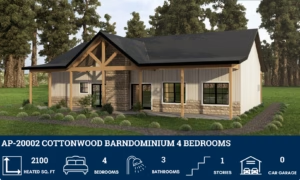
This is a strong option for buyers who want a modern farmhouse or residential look without giving up shop function. It also helps if you want outdoor living at the front and work zones tucked away behind the scenes.
The downside is vehicle circulation. You need enough drive access to make the shop convenient. If backing trailers or larger equipment into the rear becomes a hassle, the clean front elevation may not be worth it.
Browse hundreds of barndominium floor plans for FREE:
👉 https://barndominiumplans.com/?ref=luke_divin
3. Center core layout with split zones
Some of the best shop house plan ideas use the middle of the plan as a control point. The kitchen, dining, and living room sit in the center, with bedrooms on one side and the shop connection, mudroom, laundry, and storage on the other.
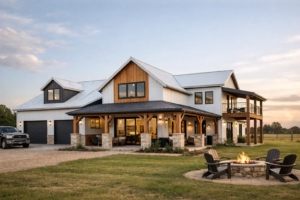
This creates a natural split between quiet and active spaces. It is particularly smart for families because parents and kids can move between the house and shop without crossing through every private room. It also makes an open concept layout feel more anchored.
If you are browsing barndominium shop house floor plans, this approach often feels better in real life than plans with long hallways. The center core keeps movement compact. Just make sure the utility spaces are large enough to handle the transition from work boots to living room.
Browse hundreds of barndominium floor plans for FREE:
👉 https://barndominiumplans.com/?ref=luke_divin
4. Shop-first plans with a serious work zone
Not every buyer needs the shop to be secondary. If your shop is central to how you live, whether for equipment storage, hobbies, vehicle work, or a large RV bay, a shop-first plan can make sense. In these layouts, the shop usually takes up a major share of the footprint, with the living area designed to stay efficient and comfortable rather than oversized.
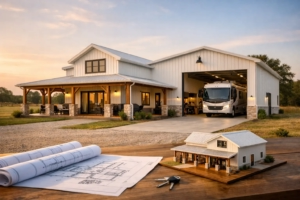
This idea works well for landowners who spend a lot of time outdoors and want the building to support that lifestyle. It also pairs naturally with barndominium floor plans with RV garage features, especially when taller doors and deeper bays are part of the must-have list.
The risk is overbuilding the shop and underplanning the home. A house that feels like an afterthought can hurt long-term comfort and resale flexibility. If you lean this direction, pay close attention to ceiling height in the living area, kitchen storage, and bedroom sizing.
Browse hundreds of barndominium floor plans for FREE:
👉 https://barndominiumplans.com/?ref=luke_divin
5. L-shaped shop house plans
An L-shaped layout gives you more control over privacy and outdoor space. One leg can hold the living area while the other contains the shop or garage bays. The inside corner often creates a natural patio, porch, or protected outdoor area.
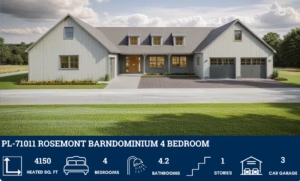
This is one of the most versatile options if you want the building to frame a driveway or create a sheltered approach. It can also help reduce the visual impact of a large shop from the front.
L-shaped plans are not always the cheapest route because the footprint and roofline can get more complex. But for buyers who want a cleaner separation between home life and work space without stretching everything into one long rectangle, it can be worth it.
Browse hundreds of barndominium floor plans for FREE:
👉 https://barndominiumplans.com/?ref=luke_divin
6. Two-story plans that keep the footprint tighter
When the site is limited or you want more living space without expanding the slab too far, a two-story shop house plan becomes attractive. The shop stays below, the main living area can remain on the first floor, and extra bedrooms or flex space move upstairs.
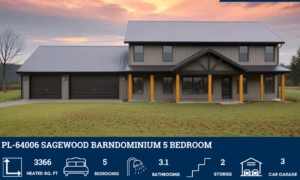
This setup often works for 4-bedroom barndominium plans or for families who need an office, bunk room, or bonus area. It can also leave more room for large bays below without making the building feel too spread out.
The trade-off is obvious. Stairs are not ideal for everyone, and second-story layouts add planning decisions around noise, storage, and heating and cooling. Still, if you need both a real shop and a family-sized home, this is one of the most efficient ways to get there.
Browse hundreds of barndominium floor plans for FREE:
👉 https://barndominiumplans.com/?ref=luke_divin
7. Plans with a true mudroom buffer
One of the simplest ideas is also one of the most overlooked. A proper mudroom between the shop and the house changes how the whole plan performs. Instead of walking straight from a dusty bay into the kitchen, you move through a controlled transition zone with space for boots, coats, laundry, a sink, or freezer storage.
That buffer is valuable in every climate, but especially in states where rain, red dirt, and outdoor work are part of daily life. It keeps the home cleaner and makes the floor plan feel more intentional.
When comparing plans, do not treat the mudroom as a throwaway square footage line item. In a shop house, it earns its keep every single day.
Browse hundreds of barndominium floor plans for FREE:
👉 https://barndominiumplans.com/?ref=luke_divin
8. Open living areas with private bedroom wings
Many buyers looking for the best shop house plan ideas want open concept living, and for good reason. It helps the home side feel larger, brighter, and more connected. But open concept only works when the bedrooms still feel protected from noise and traffic.
That is why the best versions combine a large central living area with a separate bedroom wing or split-bedroom arrangement. You get the spacious feel people want in barndominium floor plans, but you avoid the issue of every room opening directly into the main gathering space.
This layout tends to age well because it works for couples, families, and empty nesters. It also makes customization easier if you need to swap a bedroom for an office later.
Browse hundreds of barndominium floor plans for FREE:
👉 https://barndominiumplans.com/?ref=luke_divin
9. Porch-focused layouts that soften the building
A wraparound porch or deep front porch can do a lot for a shop house. It makes the structure feel more residential, adds usable outdoor living space, and helps tie the shop side and home side together visually.
This is especially useful if you like the practicality of a large shop footprint but do not want the building to look too harsh from the front. Porch-focused plans also work well in warmer regions where shaded outdoor space gets real use for much of the year.
The key is proportion. A porch should support the layout, not cover up a weak one. If the interior flow is awkward, adding a porch will not fix it.
Browse hundreds of barndominium floor plans for FREE:
👉 https://barndominiumplans.com/?ref=luke_divin
How to choose the right plan for your property
Start with the vehicles and uses that drive the shop size. Measure what needs to fit, including turning clearance and storage needs. Then look at the home side with equal honesty. How many bedrooms do you need now, and how many will you actually use five years from now? Do you want one story for long-term convenience, or is a two-story layout worth it to preserve footprint efficiency?
After that, focus on transitions. Where do you enter after working outside? Where does laundry go? Is there enough pantry and utility storage? These details rarely look exciting in a floor plan search, but they are the difference between a plan that photographs well and one that lives well.
If you are actively comparing customizable layouts, Turn Key Building Finder can help narrow the field by function, size, and plan type. That matters because the right shop house is usually not about finding one perfect trend. It is about matching a layout to your land, your equipment, and the way you move through the day.
The best plan will feel obvious once the work zone, living zone, and transition spaces all make sense together. That is the point where the guesswork drops out and the build starts to look real.
Browse hundreds of barndominium floor plans for FREE:
👉 https://barndominiumplans.com/?ref=luke_divin