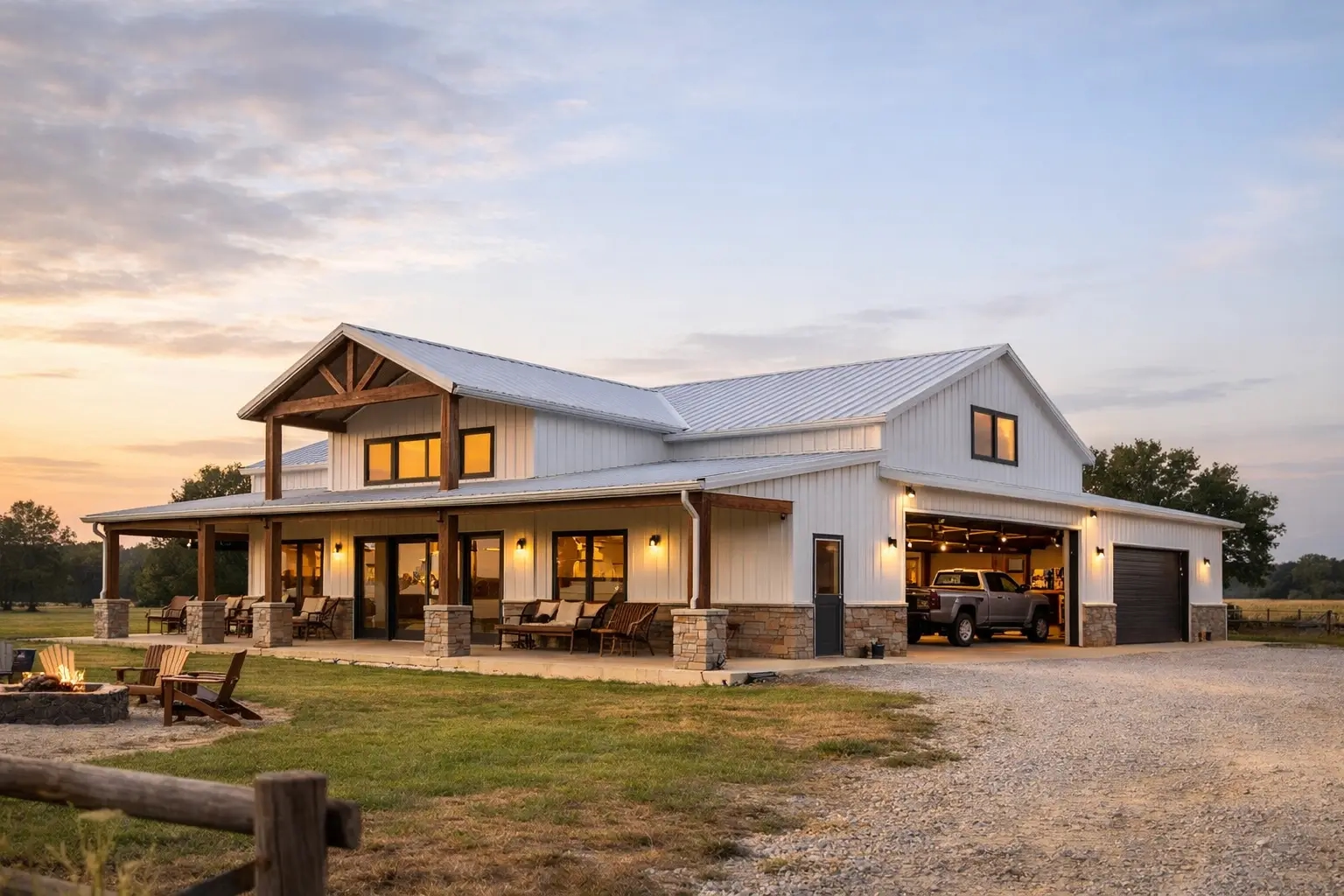
Sticker shock usually starts with square footage, but the real budget killer is the wrong layout. Cheap barndominium floor plans are not about squeezing your life into a box. They are about choosing a plan that keeps framing, plumbing, rooflines, and daily living simple enough to control cost without creating regrets later.
That matters because a plan can look affordable on paper and still become expensive once you add hallway waste, complicated corners, extra bathrooms, or a garage that eats the whole footprint. If you are comparing barndominium layouts before you build, the smartest move is not chasing the lowest plan price. It is finding the floor plan that gives you the most usable space for the least structural complexity.
What makes barndominium floor plans cheaper
The biggest cost driver is usually not style. It is shape. A simple rectangle is often more affordable to build than a plan with multiple bump-outs, angled walls, and layered roof sections. Every added corner and roof transition can increase labor, materials, and opportunities for mistakes.
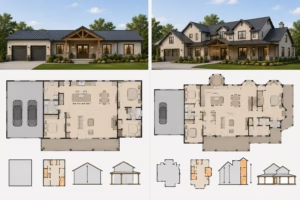
Plumbing layout matters just as much. When the kitchen, laundry, and bathrooms are grouped together, the plan usually costs less to execute than one with fixtures spread from one end of the house to the other. This is one reason many affordable barndominium floor plans feel compact and efficient even when they are roomy enough for a family.
Ceiling changes can also shift the budget fast. A vaulted great room may be worth it for some buyers, but if every room has a different height or structural treatment, costs add up. The same goes for oversized porches that wrap multiple sides of the house. They look great, but they are not free square footage.
Cheap does not have to mean plain. It usually means disciplined. A clean footprint, open living area, and practical bedroom arrangement can give you a home that feels generous without paying for design flourishes that do not improve daily use.
The layouts that stretch your budget best
If your goal is affordability, one-story plans tend to be the easiest place to start. They are simpler to live in and often easier to understand when you are comparing room flow. For many buyers, especially couples, small families, or landowners planning a first build, the sweet spot is a plan with two or three bedrooms, two baths, and one open kitchen-living area.
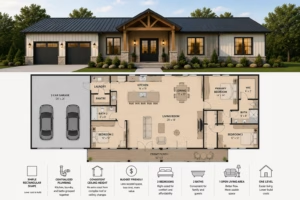
Two-bedroom plans
A two-bedroom layout often delivers the best cost-per-function balance. You get enough separation for a primary suite and a guest room or office, but you avoid paying for bedrooms that sit empty most of the year. This setup works especially well for empty nesters, first-time barndominium buyers, or anyone building on rural land who wants a practical full-time home.
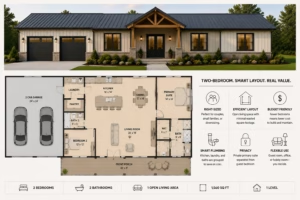
The most budget-friendly versions usually place both bedrooms on one side of the house or put them at opposite ends with the living space in the middle. Either can work. The better option depends on whether privacy or plumbing efficiency matters more to you.
Three-bedroom plans
Three-bedroom layouts are often the best fit for families because they add flexibility without pushing the footprint too far. One room can serve as a kid’s room, guest room, or home office. If you want cheap barndominium floor plans that still leave room to grow, this is often where the value is.
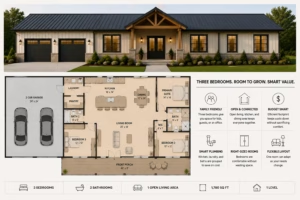
The key is avoiding oversized bedrooms and too much hallway. If each bedroom is reasonably sized and the living area stays open, a three-bedroom barndominium can feel spacious without becoming expensive.
Four-bedroom plans
A four-bedroom plan can still be affordable, but only if the layout is efficient. This is where buyers can get in trouble by choosing a house that looks impressive in a rendering but carries too much enclosed square footage and too many bathrooms.
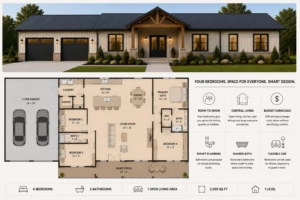
If you need four bedrooms, look for plans where secondary bedrooms share a bath and the living core stays central. That approach keeps both the budget and the plan more manageable.
Features worth keeping and features worth questioning
Some features improve everyday living enough that they are worth the money. Others sound appealing during browsing but do not add much once you move in.
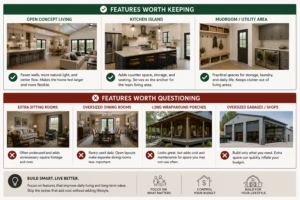
Open concept living is usually worth keeping. It reduces interior walls, makes the home feel larger, and gives you flexibility with furniture and traffic flow. A kitchen island that anchors the main room is also a smart use of space if the proportions are right.
A mudroom or small utility area can be worth more than a dramatic foyer. In real life, storage, laundry access, and a place to drop boots or bags often matter more than a formal entry. This is especially true in states where barndominium living often pairs with acreage, pets, or outdoor work.
What should you question? Extra sitting rooms, oversized dining rooms, and long front porches that you may not use often. A shop or garage can absolutely be a smart addition, but it needs to match how you live. If you need a true workspace, equipment storage, or RV bay, build for that purpose. If not, a giant attached area can quietly blow up the plan budget.
Cheaper barndominium floor plans with a shop or garage
This is where trade-offs become real. A barndominium with shop space can be cost-effective if it replaces the need for a separate outbuilding. It can also become expensive if the shop dominates the design and forces the living area into an awkward shape.
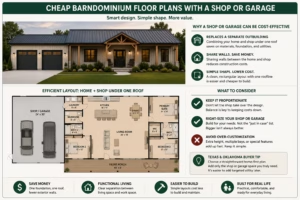
The best value usually comes from plans that keep the home and shop under one simple roofline while maintaining a clear separation between clean living space and utility space. If the shop is too deep, too tall, or too customized from the start, affordability drops fast.
The same logic applies to attached garages. A modest two-car garage with direct entry can make sense. An oversized garage with extra bays, deep storage, and multiple access points may be useful, but it is no longer the cheap option.
For buyers in Texas, Oklahoma, and similar states where shop house layouts are common, it often makes more sense to choose a straightforward home-first plan and then decide how much work space you truly need. It is easier to add targeted utility than to shrink an oversized design after you have fallen in love with it.
How to compare floor plans without wasting time
When you are browsing plans, start with how you actually live, not with exterior style. Ask yourself where you spend most of your time, how many bedrooms you truly need, and whether you need bonus space every day or just occasionally. This sounds obvious, but many buyers compare plans by curb appeal first and function second.
Next, look at circulation. Can you get from the entry to the kitchen without cutting through the whole house? Is the laundry placed where it makes sense? Are bathrooms accessible without wasting square footage on hallways? Good affordable plans feel easy to move through.
Then study the expensive zones. Kitchens, bathrooms, utility rooms, garages, shops, and porches affect cost more than people expect. A slightly smaller home with a better layout often beats a bigger home that needs too many custom adjustments.
Customization can still be part of the plan. In fact, it often should be. But the base layout should already be doing most of the work. If you need to move every wall to make a plan fit your life, it was probably not the right starting point.
When a cheap plan becomes too cheap
There is a line between affordable and shortsighted. If a floor plan has no storage, a cramped kitchen, or a primary suite that feels like an afterthought, the money you save upfront may come back later as frustration. Cheap barndominium floor plans should reduce waste, not strip out function.
Watch for plans that look efficient but ignore furniture placement, pantry space, or bedroom privacy. A living room may be technically large enough, but if window and door placement leave no good wall for seating, the room will never feel right. The same goes for kitchens with not enough counter space or primary bathrooms with awkward circulation.
The goal is not the absolute cheapest drawing. It is the least expensive plan that still works well for real life, because that is the plan you are less likely to outgrow or regret.
Choosing a plan that fits now and later
Most buyers do best with a layout that solves today’s needs and leaves a little room for change. That might mean a third bedroom that doubles as an office, a garage that can handle storage without becoming a full shop, or a porch that is usable without wrapping the entire house.
Turn Key Building Finder speaks to a lot of buyers who are still early in the planning stage, and the pattern is clear. The strongest plan choices are usually not the flashiest ones. They are the layouts that balance affordability, flexibility, and clean design from the start.
If you are sorting through cheap barndominium floor plans, trust the plans that feel efficient, not stripped down. A good layout should make the build easier, the budget clearer, and your next step feel a lot more certain.