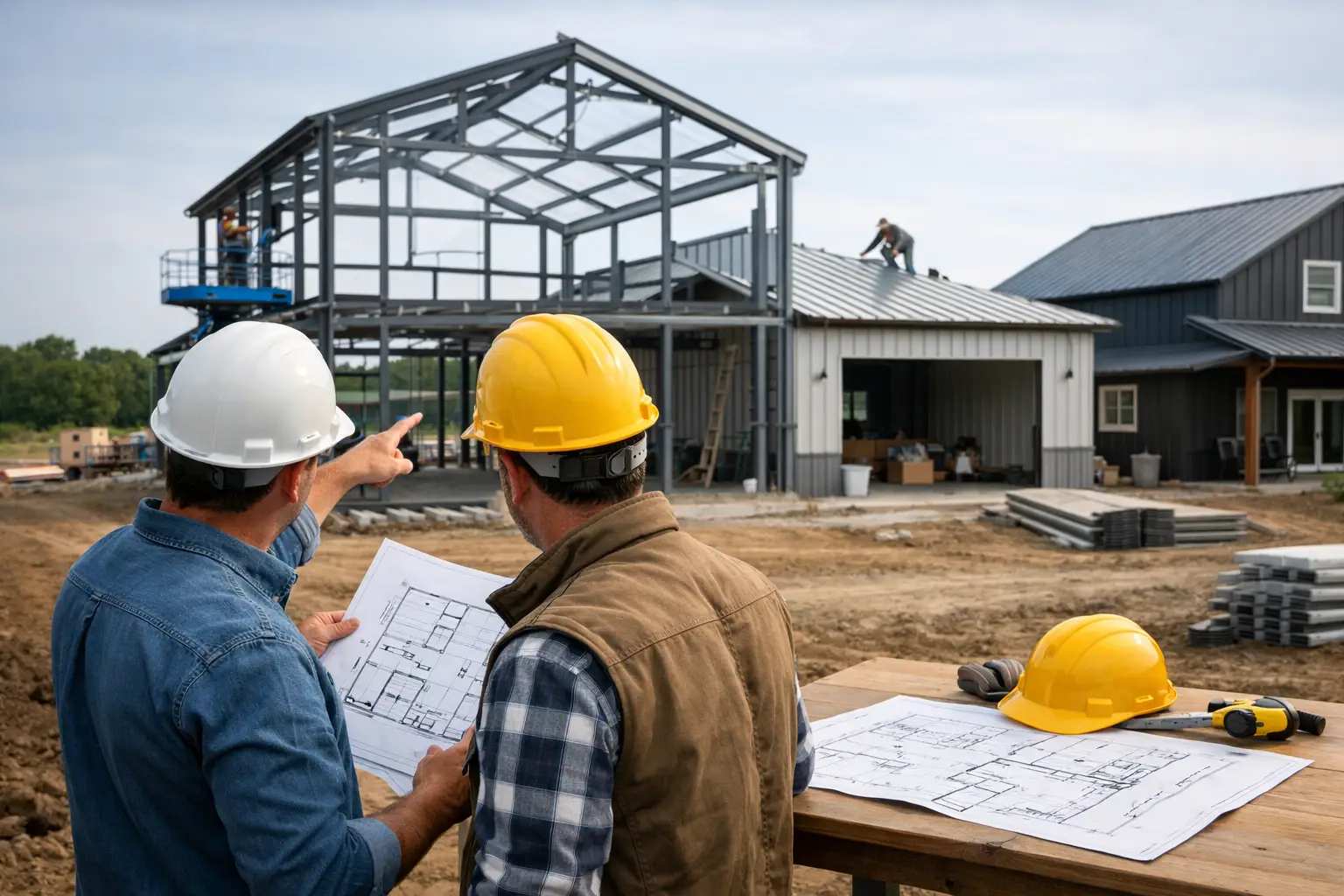
A barndominium can look straightforward on paper: a metal shell, an interior layout, and a piece of land. The hard part is making sure those pieces come together under one clear scope of work. Choosing barndominium contractors is not simply about finding someone who builds metal buildings. You need a builder who understands the sequence, details, and decisions that affect a finished home, shop, garage, or workshop.
The right contractor can help turn a well-prepared plan into a manageable build. The wrong fit can leave costly gaps between site work, concrete, building erection, interior framing, and finish work. No guesswork. No wasted time. Start by comparing what each contractor actually proposes to do.
What Barndominium Contractors May Handle
Barndominium projects are often built in phases, and contractor responsibilities vary widely. One company may manage the project from site preparation through final finishes. Another may install the metal building shell and concrete slab while the owner hires separate trades for plumbing, electrical, insulation, and interior work.
Neither approach is automatically better. A full-service general contractor can simplify coordination, especially for owners who live out of town or have limited construction experience. A phased approach may offer more control over individual selections and pricing, but it requires more time, decisions, and communication from the owner.
Before requesting quotes, decide whether you are looking for a contractor to coordinate the whole build or a specialist for a defined stage. Be specific about whether your project includes a living area, attached garage, porch, shop bay, loft, or future expansion. Those details affect labor, materials, inspections, and scheduling.
The shell is not the whole project
A metal building package is an important component, but it is not a completed barndominium. The shell price may not include foundation work, excavation, utility connections, windows, exterior doors, interior partitions, drywall, cabinetry, flooring, or mechanical systems.
That is why a low initial shell number can be misleading when compared with a more complete proposal. Ask each contractor to identify exactly what is included, what is excluded, and which allowances may change as selections are finalized.
Start With a Build-Ready Project Description
Contractors can provide more useful feedback when they receive the same clear information. A rough idea is enough for an initial conversation, but comparable bids require more detail.
Have your floor plan, exterior elevations if available, building dimensions, desired location on the property, and a list of major priorities ready. Include the county or city, access conditions, site slope, existing utilities, and any features that could affect the build, such as a long driveway, rocky soil, floodplain concerns, or a required well and septic system.
You do not need to solve every construction question before speaking with a builder. You do need to communicate the project accurately. A contractor pricing a 40-by-60 building with a finished residence and large shop area needs different information than one pricing a detached garage with a bathroom and storage loft.
A good early conversation should also cover timing. If you have a target start date, share it, but stay realistic. Site conditions, plan revisions, permit review, material lead times, weather, and subcontractor schedules can all affect the calendar.
How to Compare Contractor Quotes Fairly
The best comparison is not the lowest total at the bottom of the page. It is the proposal that clearly matches the work you need and explains the assumptions behind the price.
Ask every contractor to break the scope into meaningful categories. For a typical barndominium, those may include site work, concrete, metal building materials, erection, framing, insulation, roofing details, exterior finishes, plumbing, electrical, HVAC, interior finishes, and cleanup. A detailed scope makes omissions easier to spot before construction begins.
If one proposal is much lower than the others, do not assume you found a bargain. It may reflect a different building specification, fewer included services, lower allowances, or work that has not been priced yet. Ask direct questions such as: Does this include the slab and footings? Who supplies windows and exterior doors? Are porches included? Is insulation part of the bid? Who is responsible for coordinating the interior trades?
Understand allowances and change orders
An allowance is a placeholder amount for an item not fully selected or priced when the contract is written. Flooring, lighting, cabinets, plumbing fixtures, and appliances are common examples. Allowances are useful, but they need to be realistic for the quality level you expect.
Change orders are not always a sign of poor management. They can result from owner changes, unexpected site conditions, or revisions requested by local authorities. Problems arise when the process is vague. Ask how changes are documented, approved, priced, and scheduled before you sign an agreement.
Also review the payment schedule. It should align with completed work or clearly defined material purchases, not rely on broad descriptions that are hard to verify. Keep all major decisions and scope changes in writing.
Qualifications That Matter for Your Build
Experience with metal buildings is valuable, but a barndominium also demands residential coordination. Look for contractors who can discuss moisture control, insulation approach, window and door integration, interior framing, slab details, mechanical planning, and how the exterior system connects at porches and transitions.
Ask about projects similar to yours, particularly those with comparable square footage, site conditions, and finish level. Request references when appropriate and ask previous clients practical questions: Was the scope clear? How were changes handled? Did communication stay consistent? Were there unresolved punch-list items at the end?
You should also ask contractors for the documentation relevant to your project and local requirements, such as insurance information and any licensing or registration details required in the area. Requirements differ by state, county, and municipality, so confirm project-specific rules with the appropriate local offices rather than relying on assumptions.
Good communication is another qualification. A contractor does not need to promise instant answers to every question, but they should be able to explain the next step, identify open decisions, and tell you who will manage the work on site.
Local Conditions Can Change the Right Choice
A contractor who is a strong fit for one location may not be the best fit for another. Soil conditions, wind exposure, snow loads, drainage, building codes, utility availability, and labor markets vary across the country.
For example, a rural property may need extensive driveway and utility planning before the building work begins. A lot near a growing city may have tighter site requirements, neighborhood restrictions, or more complex permit review. In areas with heavy snow or high winds, the building design and structural specifications may need additional attention.
This is why local and regional experience can be meaningful. It does not replace careful vetting, but it can help a contractor anticipate issues that are easy to miss in a generic quote. Ask what site or jurisdiction-specific items they would want to review before final pricing.
Questions to Ask Before Signing
The most useful questions are the ones that expose responsibilities early. Discuss who pulls permits where applicable, who coordinates inspections, who purchases major materials, and who schedules subcontractors. Confirm whether the contractor will be your primary point of contact throughout the build or whether separate crews will communicate directly with you.
Talk through the practical finish line as well. Ask what completion means under the contract, how punch-list work is handled, and what closeout documents or warranty information you should expect for installed products and work. Clear answers are more valuable than broad assurances.
You should also pay attention to fit. Your contractor will be involved in hundreds of decisions, large and small. If the communication feels rushed or unclear before work begins, it rarely becomes easier once crews are on site.
A Better Starting Point for Homeowners and Builders
Finding qualified help should not require calling random companies and hoping they build the type of project you have in mind. Homeowners can use Find a Turn Key Contractor to look for independent contractors serving their project area and begin conversations with a more organized project description.
Contractors who build barndominiums, metal buildings, shops, garages, and workshops can also benefit from being easier for serious homeowners to find. Turnkey Floor Plans is expanding a nationwide contractor network, and basic contractor listings are FREE. Contractors can use the FREE contractor signup form to list the states and service areas they serve.
Your first quote does not need to answer every question. It should give you a clear starting point, reveal what still needs to be decided, and help you choose a contractor with the right scope for the build you actually want.
Leave a Reply