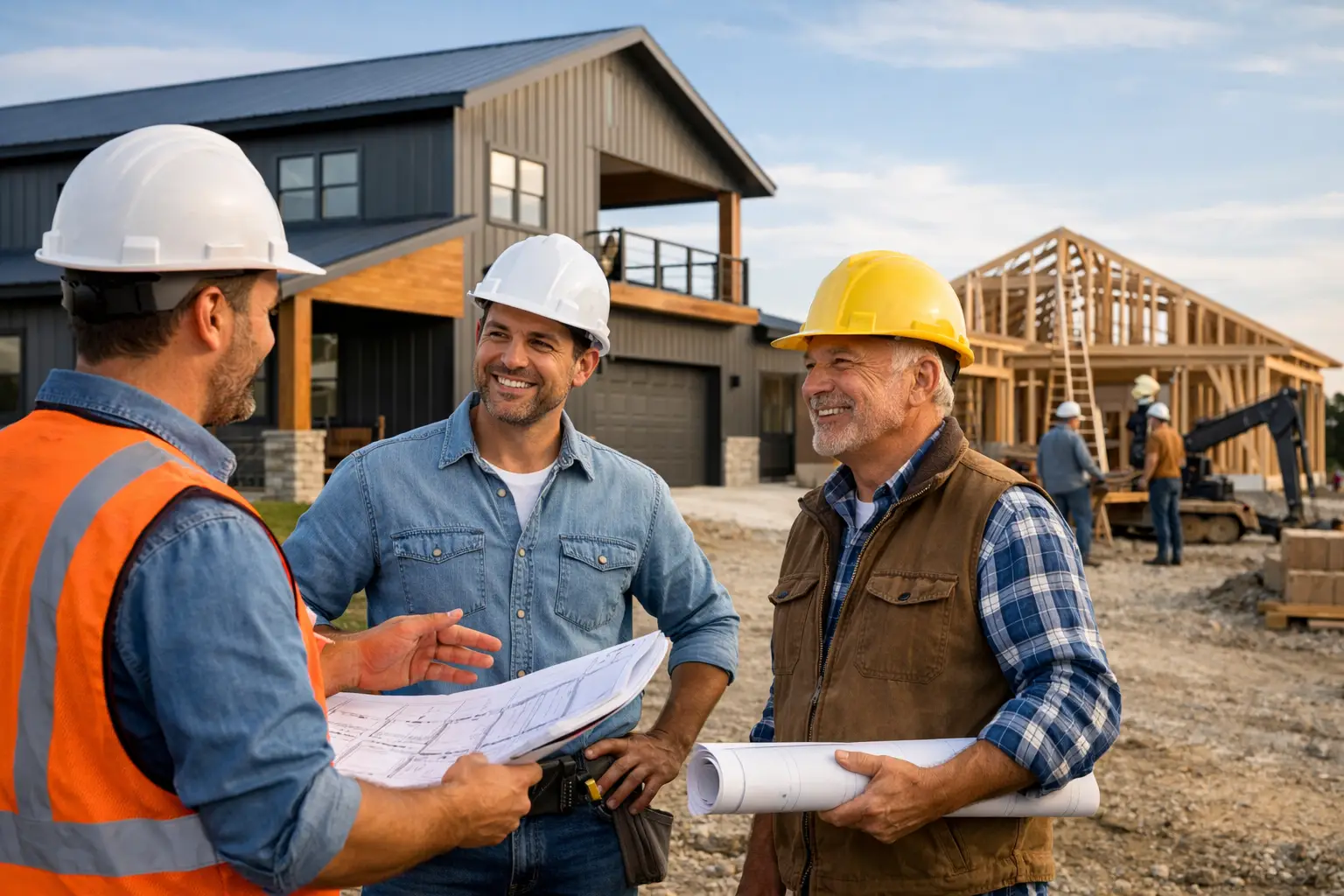
A lead is not valuable just because it includes a phone number. For builders, construction leads for contractors are worth pursuing when the project type, location, budget range, and decision timeline match the work your company actually wants to take on. A well-matched inquiry can become a solid project. A poor match can consume hours of estimating, site visits, and follow-up with no realistic path forward.
That distinction matters for barndominium builders, metal-building contractors, and general contractors. Homeowners may use similar terms when searching, but a detached garage, a workshop, and a full barndominium build involve very different scopes, schedules, trades, and risk levels. The best lead strategy starts with clarity about the work you provide and the areas you can serve well.
What Makes Construction Leads for Contractors Worth Pursuing
A qualified lead usually has four things: a defined project, a realistic location, enough preliminary information to discuss the scope, and a homeowner who is prepared to communicate. It does not need to arrive with every finish selection or a final construction budget. Most early-stage homeowners are still comparing options. But they should have a property or a credible plan for one, a general idea of the building they need, and a reason to begin the conversation now.
For contractors, service area is often the first filter. A project may be a perfect fit on paper but become unprofitable if it requires repeated long-distance trips for site review, supervision, subcontractor coordination, or warranty work. Be specific about your service radius and the counties, regions, or states where you regularly build. If you will travel farther for larger projects, say what changes the equation.
Project fit is next. A contractor specializing in post-frame shops may not be the right resource for a homeowner seeking a turnkey barndominium build. A general contractor who coordinates complete residential projects may not want small repair work. Neither choice is wrong. Clear positioning helps homeowners reach out to the right people and helps contractors spend time on opportunities they can price and perform with confidence.
Start With a Better Contractor Profile
A contractor directory profile should answer practical questions before the homeowner calls. It is not a sales brochure. It is a way to reduce confusion on both sides.
Describe the building types you handle, such as barndominiums, metal homes, garages, workshops, additions, or shop houses. Explain whether you provide general contracting, shell construction, concrete work, framing, interior build-out, or another defined portion of the project. If your work is limited to certain sizes, locations, or construction stages, include that too.
Use plain language about your service area. “Serving central Texas” is useful, but “serving the Austin, Waco, Temple, and surrounding areas” gives a homeowner a much clearer starting point. Do not claim a statewide footprint unless your team and subcontractor relationships can support it. A smaller, accurately described coverage area often produces better conversations than a broad claim that creates false expectations.
Your project photos, when available, should show the kind of work you want more of. A homeowner planning a garage wants to see relevant garages. A family evaluating a barndominium wants examples that demonstrate your ability to manage a project of that scale. Keep the description factual. Explain your process, the types of builds you take on, and what a prospect should have ready before requesting a quote.
Ask Questions That Protect Everyone’s Time
The first response to a new inquiry should move the project forward without turning into an interrogation. Contractors need enough information to decide whether the opportunity fits, while homeowners need to feel heard and understand the next step.
Start with the project location and the type of building planned. Ask whether the homeowner already owns the land, whether they have a survey or site information available, and whether they have a floor plan or a target size. For a barndominium, it is helpful to know whether the request is for a complete build or a particular phase. For a shop or garage, ask about intended use, dimensions, doors, utilities, and any planned finished space.
Timing is equally useful. “We want to build someday” is different from “we are selecting a contractor after closing on the land next month.” Neither prospect should be dismissed automatically. Early planners can become excellent clients when they receive clear guidance, but they should be handled with an appropriate follow-up schedule rather than the same estimating effort as a job ready for a site visit.
Budget conversations require care. Homeowners may not know current local construction costs, especially if they are comparing online examples from another state or from several years ago. Rather than promising a project cost, explain which factors drive pricing: site conditions, building size, foundation requirements, utility runs, interior finish level, local labor, material choices, and the scope of work. A preliminary budget range may be useful when enough facts are available, but it should never be presented as a final quote without the needed project details.
Help Homeowners Arrive Better Prepared
Homeowners can improve the quality of contractor conversations before they make a call. The goal is not to know every technical detail. It is to organize the decisions that affect scope and price.
They should be ready to explain the building’s intended use, approximate size, location, desired completion window, and whether they own the property. A basic floor plan or sketch is helpful when available, especially for projects with living space, multiple rooms, porches, or specialized areas. Photos of the site can also help a contractor identify questions about access, slope, clearing, or utilities before an in-person visit.
It is smart to compare more than one contractor, but comparisons need to be apples to apples. One proposal may include site preparation, concrete, building erection, and interior work, while another covers only the shell. A lower number is not automatically a better number if major work has been left out. Ask each contractor to explain the scope, allowances, exclusions, payment schedule, and the decisions that could change pricing.
Homeowners should also ask how the contractor handles communication during construction, who coordinates subcontractors, and what happens when site conditions differ from the original assumptions. Those questions are not confrontational. They help set expectations before money changes hands.
For homeowners looking for independent builders in their area, the Turnkey Floor Plans directory offers a practical place to start. Use Find a Turn Key Contractor to look for professionals serving your state, then contact companies whose project focus and service area align with your build.
Why Directory Visibility Matters for Contractors
Many homeowners start their search before they know the precise name for what they need. They may search for a barndominium builder, metal building contractor, garage builder, shop builder, or general contractor near their property. A clear directory listing gives your company a chance to appear when that search matches your actual work.
The value is not simply more inquiries. It is better context around those inquiries. When homeowners can see your location, building specialties, and service territory before contacting you, they are more likely to reach out with a project that belongs in your pipeline. That does not eliminate unqualified requests, and no directory can promise work. It can, however, make your business easier for the right homeowner to find.
Contractors building barndominiums, shops, garages, workshops, and related projects can complete the FREE contractor signup form for the states and service areas they serve. Basic listings are free, and accurate information helps expand coverage where homeowners need more local options. Update your profile as your territory, project focus, or capacity changes.
Build a Lead Process, Not Just a Contact List
Good leads can still be lost through slow follow-up or unclear next steps. Set a simple internal process for responding to new inquiries, qualifying the basic project details, scheduling calls or site visits, and documenting what was discussed. Even a small team benefits from consistent notes. They prevent missed details when a prospect calls back weeks later and make handoffs easier if more than one person handles estimating or sales.
Speed matters, but accuracy matters more. A fast response that overpromises can create problems later. A practical first reply acknowledges the inquiry, confirms the service area and project type, and requests the information needed to determine the next step. If the project is outside your scope, a straightforward answer is more helpful than dragging out the conversation.
The best contractor leads are not the loudest or the most urgent. They are the projects where expectations are clear enough for both sides to make a sound decision. Contractors who communicate their fit plainly, and homeowners who prepare before requesting quotes, create a better starting point for every build.