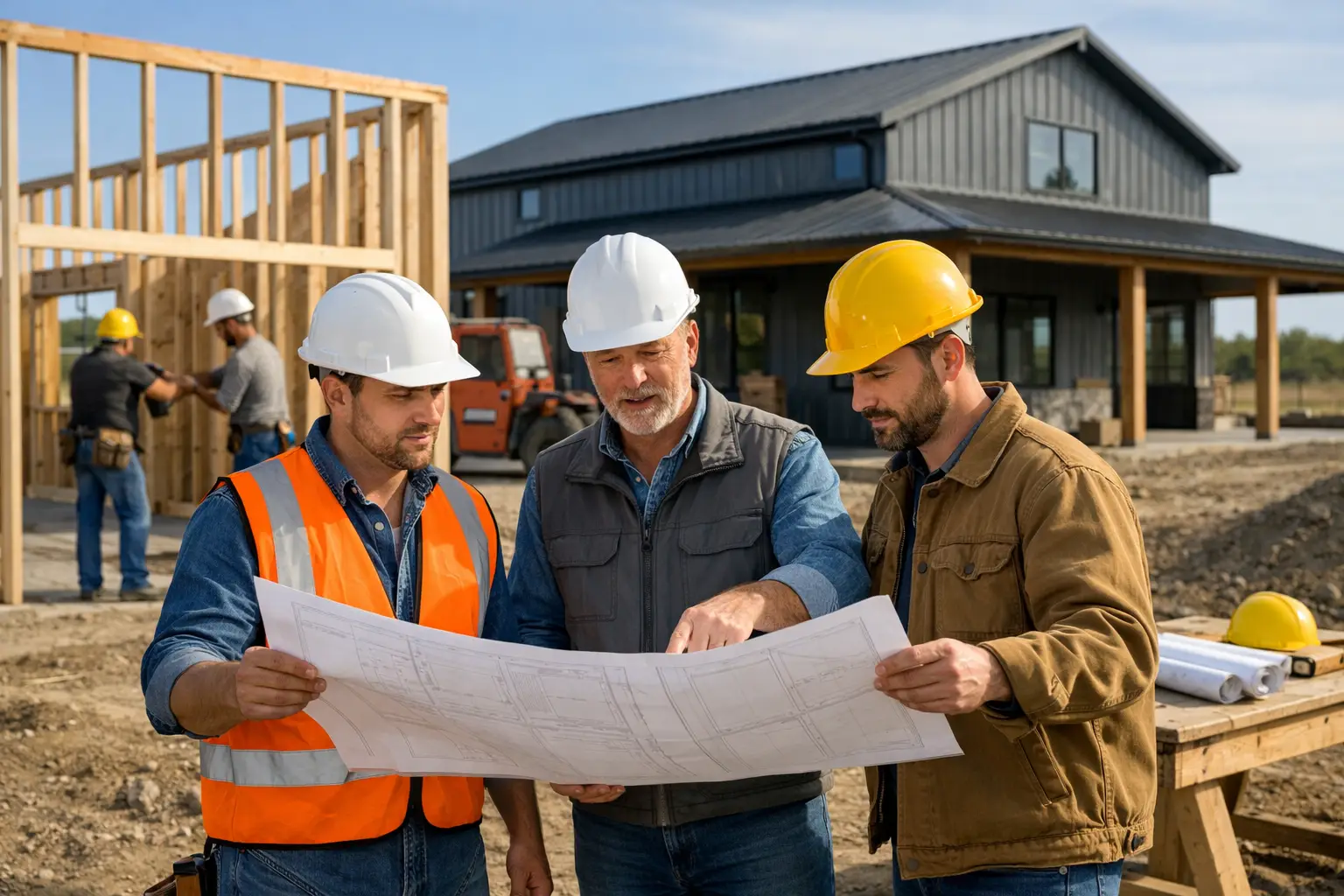
A search for general contractors wanted can mean two very different things. A homeowner may be trying to find the right builder for a barndominium, detached garage, workshop, or metal building. A contractor may be looking for a practical way to get their business in front of people planning those projects. Both sides benefit when the project details are clear before the first call.
A good contractor search is not about collecting the most names. It is about finding independent builders whose experience, service area, scheduling approach, and estimating process fit the job you actually plan to build. For contractors, a useful listing is not just a business name. It should help a serious homeowner understand what you build and where you work.
When Homeowners Search “General Contractors Wanted”
Most homeowners are not simply looking for a general contractor. They are looking for someone who can take responsibility for coordinating a specific build from site preparation through completion. That distinction matters, especially with steel-frame barndominiums and metal buildings.
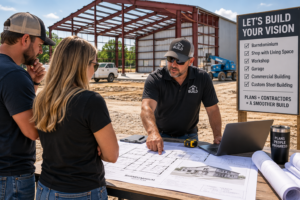
A builder who is excellent at remodeling homes may not regularly manage a project involving a metal building package, structural steel columns, steel beams, metal wall girts, roof purlins, concrete work, insulation, interior build-out, and utility coordination. That does not automatically rule them out, but it should lead to better questions.
Start by describing the project in plain terms. Explain whether you are building a full-time barndominium, a shop with living space, a standalone workshop, a garage, or another steel-frame structure. Include the county or city, target building size, intended use, site status, and whether you have selected a plan or building package. Contractors can give more meaningful feedback when they are not forced to guess at the scope.
Match Experience to the Type of Build
The phrase “general contractor” covers a broad range of work. Some contractors oversee turnkey residential construction. Others focus on concrete foundations, metal-building erection, garages, finish-outs, or site work. A well-run project may involve several specialists, with one general contractor coordinating the schedule and quality of the work.
Ask prospective contractors which portions they handle directly and which trades they coordinate. For a steel-frame barndominium, it is reasonable to ask about prior work with metal-building systems, concrete slabs, building-envelope details, insulation, and residential interiors. The goal is not to demand that one company performs every task with its own crew. The goal is to understand who is accountable for organizing the work.
Experience should also match the scale of the project. A simple enclosed shop and a multi-bedroom barndominium may share a steel-frame shell, but the planning, finish work, mechanical systems, and permitting steps can be very different.
Prepare Before Requesting Contractor Quotes
The fastest way to get vague estimates is to send vague information. Before contacting builders, organize the decisions that affect price, schedule, and construction approach.
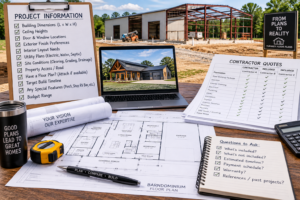
Your project information should cover the building dimensions, ceiling heights, door and window locations, exterior finish preferences, interior layout needs, utility plans, and site conditions you already know. If you have a floor plan, provide the most current version. If the plan is still changing, say so upfront. A contractor can often offer early budget guidance, but a final quote usually requires a defined scope.
Land conditions are equally important. Let builders know whether the property has road access, clearing needs, elevation changes, drainage concerns, power nearby, water options, or an existing septic plan. Those details can change the work required before the building itself begins.
Do not assume every quote includes the same items. One contractor may price the foundation and steel-frame shell, while another may include interior framing, electrical, plumbing, HVAC, and finishes. Compare scopes line by line instead of comparing only the bottom number.
Questions That Lead to Better Conversations
A productive first conversation should clarify process, not just price. Ask how the contractor prefers to receive plans, what information is needed for an initial estimate, and what decisions must be made before a contract can be finalized.
You should also ask who will be your day-to-day point of contact, how changes are documented, and how allowances are handled when materials or selections are not yet final. If a contractor expects the owner to purchase a building package separately, make sure the responsibilities for delivery, unloading, assembly, and warranty coordination are clearly understood.
Verify the credentials, insurance, registrations, and local requirements that apply to your project and location. Requirements vary by state, county, and municipality, and a responsible contractor should be willing to discuss how local rules affect the build. This is basic due diligence, not an accusation.
Compare Builders Without Chasing the Lowest Number
A low price can be attractive, particularly when land, financing, and finishes are all competing for the same budget. But a quote that appears lower may exclude substantial work, use different assumptions, or leave key decisions unresolved.
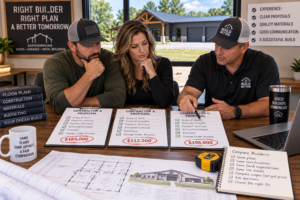
Look for detail. A useful proposal identifies the work included, major materials, payment structure, estimated schedule, exclusions, and the process for approved changes. It does not need to predict every unknown, but it should show that the contractor has thought through the build.
Price is one factor. Communication is another. If a contractor takes time to identify missing information before quoting, that can be a better sign than a quick number based on assumptions. On the other hand, a detailed proposal is not enough if the builder is unable to explain it clearly or does not have a workable schedule for your location.
For homeowners comparing several companies, consistency makes the decision easier. Provide each contractor with the same plans, building size, finish expectations, and site details. That gives you a more honest basis for comparing proposals.
General Contractors Wanted: A Better Listing for Builders
Qualified contractors are often looking for work in a different way than homeowners expect. They do not need random inquiries with no land, no budget direction, and no idea what they want to build. They need visibility with people who are actively planning barndominiums, metal buildings, shops, garages, and workshops in the areas they serve.
A contractor profile should make it easy for a homeowner to determine whether a conversation makes sense. State the markets you cover, the project types you take on, and whether your team coordinates complete builds, shell construction, finish-outs, concrete, or other defined portions of the work. Be specific without promising more than your current capacity allows.
Photos matter, but accuracy matters more. For barndominium and metal-building work, project images should show realistic steel-frame construction when framing is visible: structural steel columns, steel beams, metal wall girts, and steel roof purlins. Finished-project photos should also represent the type of work you want to attract.
Keep your listing current. A contractor who has expanded into a neighboring county, shifted toward garages and shops, or added barndominium experience should update the service area and project details. Clear information helps homeowners self-select before they reach out, which saves time for everyone.
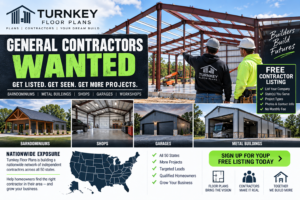
Turnkey Floor Plans is expanding its nationwide independent contractor network across all 50 states. Basic contractor listings are free, giving general contractors and specialized builders a straightforward way to be found in the states and service areas they serve. Contractors who want to be listed can use the FREE contractor signup form and describe their coverage and project focus accurately.
Build the Relationship Before the Contract
The right contractor relationship starts well before equipment arrives on site. Homeowners should be prepared to make decisions, communicate changes promptly, and understand that weather, material lead times, inspections, and site conditions can affect the schedule. Contractors should explain their process early and avoid making assumptions that later become disagreements.
The best match is rarely the first name in a search result or the lowest quote on a spreadsheet. It is the builder whose experience fits the project, whose scope is clear, and whose communication gives you confidence to move forward with fewer surprises.