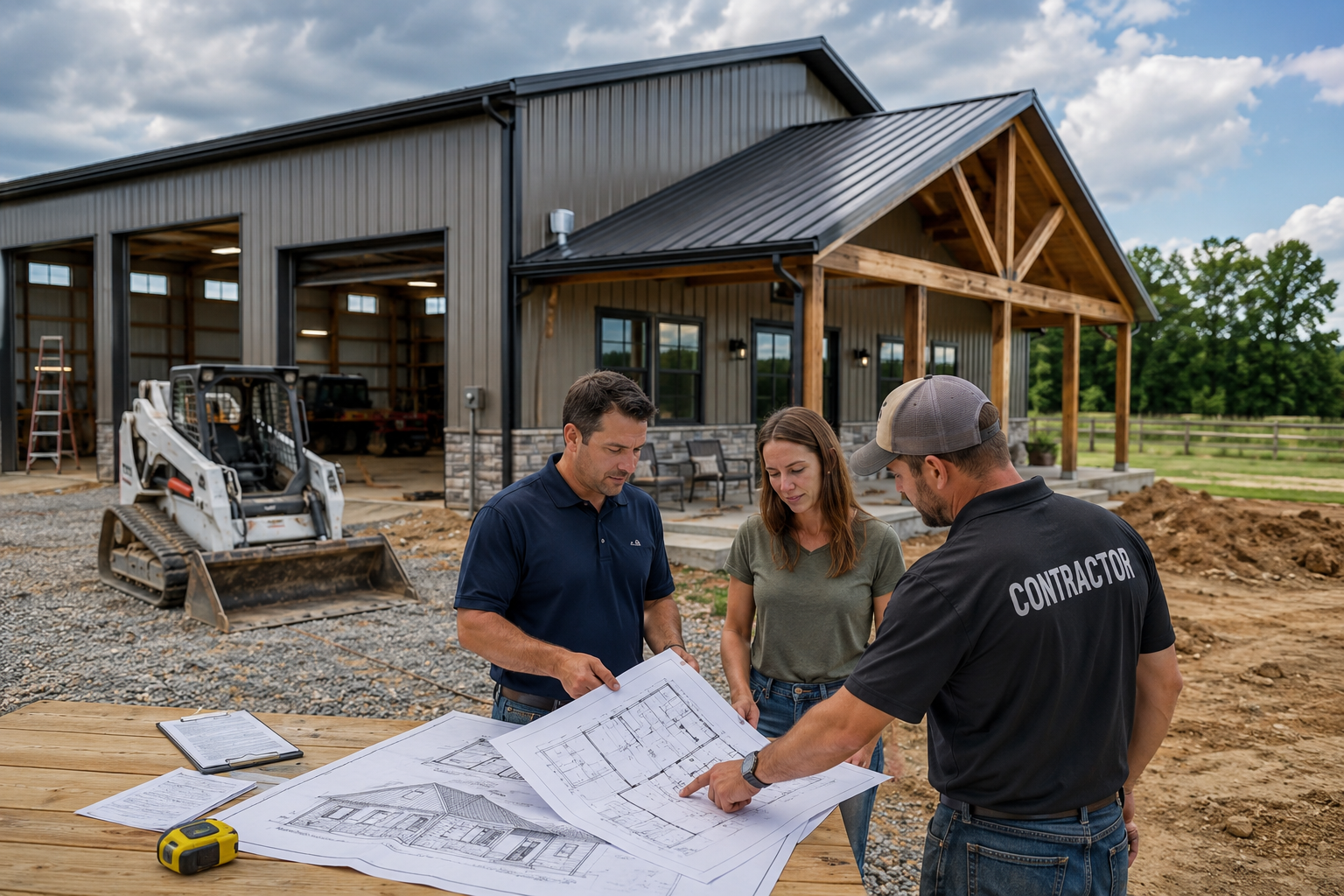
A Kentucky barndominium project can look straightforward on paper: a metal building, a slab, living space, and a porch. The real work is coordinating the right people, materials, site conditions, and inspections in the right order. That is why choosing Kentucky barndominium contractors is one of the most consequential decisions you will make before construction starts.
The right builder is not simply someone who can erect a metal shell. For a finished home, the contractor needs to understand site preparation, foundations, building-envelope details, residential systems, local requirements, scheduling, and the handoffs between trades. For a shop, garage, or workshop, the priorities may be different, but clear scope and experienced coordination still matter.
Start With the Type of Build You Actually Need
“Barndominium” covers a wide range of projects. One homeowner may be planning a full-time residence with a finished interior, while another needs a detached garage with a small conditioned room, a hobby shop, or a combination shop-and-living layout. A contractor who is a good fit for one may not be the best fit for the other.
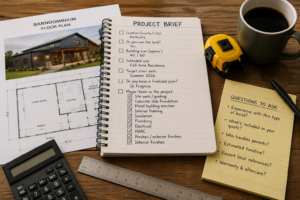
Before calling builders, put together a basic project brief. Include the county or city, whether you already own the land, approximate building size, intended use, target start date, and whether you have a finalized plan. Also identify the major items you expect in the project: site work, slab or other foundation work, metal building erection, interior framing, insulation, plumbing, electrical, HVAC, porches, and finish work.
This is not busywork. Contractors can give more useful feedback when they know what they are being asked to price. It also prevents a common problem: comparing one quote that includes a complete build with another that only covers the shell and slab.
What Kentucky Barndominium Contractors May Handle
There is no single contract structure for every barndominium. Some builders manage the project from site preparation through final finishes. Others focus on the shell, concrete, or a defined phase of work and coordinate with owners, general contractors, or separate trade contractors for the rest.
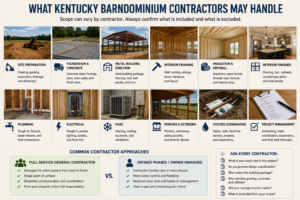
Neither approach is automatically better. A full-service general contractor can simplify communication, but the price and schedule will reflect that responsibility. Hiring defined phases separately may offer more owner control, but it also requires more time, more careful scheduling, and a clearer understanding of who is responsible when one phase affects another.
Ask every contractor to explain their role in plain terms. Do they provide design coordination? Who orders the building package? Who is responsible for grading, drainage, concrete, and utility coordination? Will they manage interior trades? What work is excluded? A contractor who answers these questions clearly is easier to work with than one who offers only a broad promise to “handle it all.”
Check Experience That Matches Your Scope
A good conversation with a potential builder should go beyond photos. Ask about projects similar in size, use, and construction type to yours. A contractor experienced in metal building shells may be highly capable, but you still need to know whether they routinely manage finished residential interiors if that is part of your plan.
Discuss the practical details. Ask how they approach foundation layout and anchor-bolt coordination, exterior moisture management, insulation strategy, window and door installation, and the transition between the metal structure and finished interior spaces. You do not need to test a contractor on engineering. You do need confidence that they recognize where early coordination prevents expensive corrections later.
Also ask for references from recent, relevant projects when available. Speak with past clients about communication, schedule management, change orders, jobsite organization, and how issues were handled. Every construction project has adjustments. What matters is whether the contractor communicates promptly and resolves problems professionally.
Verify business information, insurance coverage, and any licensing or registration requirements that apply in your project location. Requirements can vary by municipality, county, project type, and trade, so confirm details with the appropriate local authorities rather than relying on assumptions.
Get Quotes That Can Be Compared Fairly
The lowest number is not always the lowest project cost. A quote can appear attractive because major items have been left out, allowances are too vague, or site conditions have not been addressed. Your goal is a quote that lets you understand what is included, what is excluded, and what could change the price.
Provide each contractor with the same information. If you have a building package quote, plan set, site information, or finish expectations, share it consistently. Then ask for a written scope that separates major categories such as site work, concrete, building erection, interior build-out, mechanical work, and allowances for selections that are not yet finalized.
Pay close attention to exclusions. Septic systems, water service, electrical service upgrades, excavation, rock removal, retaining needs, driveway work, and final grading can materially affect the budget. Kentucky terrain can create site-specific challenges, particularly on sloped or rural parcels. A contractor cannot always price unknown conditions exactly, but they should identify likely variables and explain how they would be handled.
A useful quote also states payment timing, estimated schedule, change-order process, warranty terms, and who obtains required permits. Do not expect a builder to guarantee a final cost before selections and site conditions are known. Do expect a straightforward explanation of assumptions.
Evaluate Communication Before You Sign
The preconstruction stage is a preview of the working relationship. If a contractor is difficult to reach, avoids direct questions, or cannot describe the scope in writing before work begins, those habits rarely improve after a deposit is paid.
Look for practical communication. The contractor should ask about access to the site, utility availability, drainage, soil conditions, building dimensions, and your intended finish level. Those questions show they are trying to understand the build rather than force every project into the same template.
At the same time, homeowners should be prepared to make decisions. Delayed selections, late plan changes, and unclear expectations can affect pricing and schedule even with a capable contractor. Establish one point of contact, keep project documents organized, and make sure changes are documented before work moves forward.
Plan the Site Before the Crew Arrives
Land preparation can make or break the early phase of a Kentucky build. Before construction is scheduled, confirm access for delivery vehicles and equipment, the location of utilities, drainage paths, building placement, and any clearing or grading needs. If your property is rural, allow time for utility planning and site logistics rather than treating them as last-minute details.
Your building location should also account for water movement, driveway access, views, setbacks, and future needs. A larger porch, additional garage bay, or planned outbuilding may be easier to accommodate now than later. Good contractors can flag construction concerns, but the owner should make sure the site plan reflects how the property will actually be used.
Use a Directory to Expand Your Options
If you are still looking for a builder, the Turnkey Floor Plans contractor directory can help you find independent contractors serving Kentucky and compare potential contacts for your project type. Use the Find a Turn Key Contractor option to start with builders and general contractors whose stated service areas include your location.
A directory is a starting point, not a substitute for due diligence. Contact more than one contractor when possible, describe the same project to each one, and evaluate the responses based on scope, experience, communication, and fit. For projects outside larger population centers, ask directly about travel distance, mobilization, and whether the contractor regularly serves your county.
For Contractors Serving Kentucky
Qualified general contractors, barndominium builders, metal-building crews, concrete contractors, and builders who manage shops and garages can benefit from being visible where property owners are already searching. A basic contractor listing is free. Complete the FREE contractor signup form for the states and service areas you serve, and describe the project categories and construction phases your company handles.
Be specific in your listing. Homeowners want to know whether you build finished residences, erect metal buildings, perform concrete work, manage full projects, or take on garages and workshops. Clear service-area information helps reduce wasted calls and creates better conversations from the start.
The best Kentucky barndominium build starts with a contractor who understands the scope, a homeowner who has prepared the right information, and a written agreement that leaves little to guesswork. Take the extra time before signing. It is usually the least expensive time to solve a construction problem.