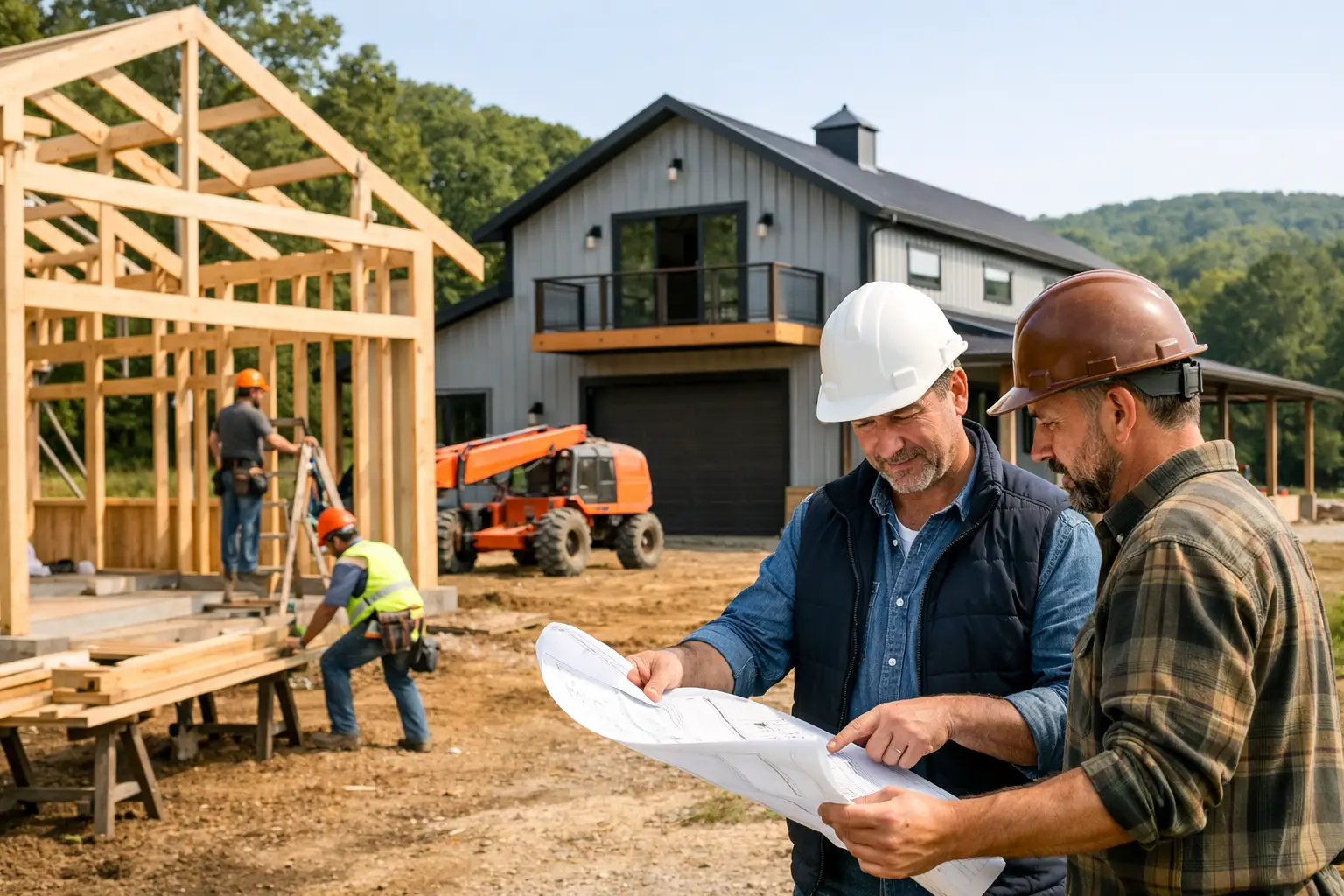
A Virginia barndominium build can look simple from the road: a metal shell, a covered porch, and a practical interior. The construction process is not simple, though. Site conditions, county requirements, foundation design, building packages, utility planning, and finish work all need to line up. Choosing the right Virginia barndominium contractors early can prevent expensive gaps between the shell, the home, and the work happening on your land.
The best fit is not always the contractor with the lowest initial number or the earliest available start date. It is the builder who understands the type of project you are planning, communicates clearly about what is and is not included, and can serve your specific part of Virginia.
What a Barndominium Contractor May Handle
A barndominium can involve several trades and more than one company. Some general contractors manage the full build from site preparation through final finishes. Others focus on the metal building, concrete work, or interior build-out and coordinate with owners or separate contractors for the remaining work.
That distinction matters when requesting estimates. A proposal for the building shell may include structural framing, roof panels, exterior walls, and installation, but exclude excavation, a slab, plumbing, electrical work, insulation, doors, porches, or interior finishes. A full-project quote may coordinate these pieces, but homeowners should still ask for a written scope that separates major phases.
Virginia projects also vary sharply by location. A rural lot in Southside Virginia may have different access, utility, drainage, and site-preparation needs than land near Richmond, Roanoke, Charlottesville, or the Hampton Roads area. A contractor’s service area and familiarity with local conditions can be just as relevant as the building style shown in a portfolio.
Start With a Build-Ready Project Description
Contractors can provide more useful quotes when the project is defined well enough to price. You do not need every paint color selected before making calls, but you should be ready to explain the building’s intended use, approximate size, location, and desired level of completion.
Share the county or city, whether you own the land, the access route for equipment, and any known information about utilities, well or septic needs, slopes, or drainage. If you have a finalized plan, provide it. If not, give contractors a straightforward description of the layout: bedrooms and bathrooms, garage or shop area, porch space, ceiling heights, and whether the project will be a primary residence, a weekend property, or a mixed-use home and workshop.
This preparation keeps early conversations focused. It also makes it easier to compare quotes that address the same project rather than a collection of assumptions.
Know Where Your Budget Has Flexibility
Metal-building projects can be priced in broad ranges at the beginning, but the real cost depends on the site and the specifications. Larger spans, taller walls, more glass, complex rooflines, porches, upgraded insulation, high-end interiors, and difficult site work all change the number. So can utility runs and the distance materials must travel.
Set a working budget, then identify the features that are essential versus the features that can be adjusted. That helps a qualified contractor offer practical options instead of reducing the price by quietly removing work you expected to be included.
How to Compare Virginia Barndominium Contractors
Start with contractors whose work matches your project scope. A builder who has experience with metal buildings and residential finish work may be a better fit for a completed barndominium than a company that only erects metal shells. On the other hand, a shell contractor may be the right choice if you already have a general contractor lined up for the rest of the build.
Ask each prospective contractor how they typically structure projects like yours. Who coordinates the building package? Who handles excavation and concrete? Who is responsible for interior trades? What work do they perform directly, and what work is completed by subcontractors? Clear answers are more valuable than a fast verbal price.
Request examples of comparable completed projects and ask for references when appropriate. Focus your questions on the contractor’s process: communication during changes, scheduling, cleanliness and site management, payment milestones, and how they handled unexpected conditions. Every project has variables. You want a contractor who addresses them directly rather than pretending they will not happen.
Before signing, ask for the business details and documentation appropriate to your project and location, including insurance information and any state or local credential requirements that apply. Confirm those details through the proper sources rather than relying on a verbal assurance.
Compare Scope Before Comparing Price
Put estimates side by side and read the exclusions first. One quote may look lower because it does not include site preparation, concrete, windows, permits, trim, insulation, or interior work. Another may include more coordination and materials but use allowances for selections that have not been finalized.
Ask contractors to clarify unclear items in writing. It is reasonable to ask whether the price includes material delivery, equipment mobilization, debris removal, temporary protection, project supervision, and coordination with other trades. If an allowance is included, ask what product level or quantity it assumes and what happens if actual costs differ.
A detailed scope does not eliminate every change order. Rock, unsuitable soil, utility issues, and owner-requested upgrades can affect a project after work begins. It does, however, reduce the chance that a major part of the build was never priced in the first place.
Ask About Schedule, Service Area, and Communication
A dependable schedule starts with realistic sequencing. Site preparation, foundation work, building delivery, erection, rough-in trades, insulation, drywall, and finishes cannot all happen at once. Weather can affect excavation, concrete, and exterior work, especially during wet or cold periods.
Ask when the contractor can start, what must be complete before that date, and how long the major phases are expected to take. Then ask who will be your day-to-day contact. Some owners prefer a single project manager. Others work directly with the owner of a smaller construction company. Either approach can work if communication expectations are clear.
Service areas deserve a direct question too. Virginia is a large state, and travel distance can affect availability, mobilization costs, and the contractor’s ability to oversee the job. A contractor may serve several regions but have limits based on project size or distance from their base. Confirm this before investing time in a detailed bid request.
Use a Contractor Directory to Narrow the Search
Searching online can produce a mix of manufacturers, material suppliers, lead sites, and contractors. Those can all be useful starting points, but homeowners still need to identify who will actually manage or perform the work on their property.
The Turnkey Floor Plans contractor directory is designed to help homeowners Find a Turn Key Contractor serving their state and project type. Use it to begin conversations with independent contractors, then apply the same screening process: confirm service area, compare scope, discuss experience, and request a clear written proposal. The directory helps reduce the initial search time. The final hiring decision should still be based on the contractor’s fit for your build.
A Note for Virginia Builders and General Contractors
Homeowners are actively searching for companies that build barndominiums, metal buildings, garages, shops, and workshops across Virginia. If your company serves one region or multiple service areas, a clear listing can help the right prospects find you with better project information in hand.
Turnkey Floor Plans is expanding its nationwide network of independent contractors. Basic contractor listings are free. Qualified Virginia general contractors, barndominium builders, and metal-building contractors can complete the contractor signup form for the states and service areas they serve. A useful listing should state the project types you handle, your coverage area, and whether you provide full general contracting, shell work, concrete, interior build-out, or related services.
For homeowners, the practical next step is to prepare a clear project description and speak with contractors who can explain their scope without guesswork. For contractors, an accurate service-area listing makes those conversations more productive from the first call.