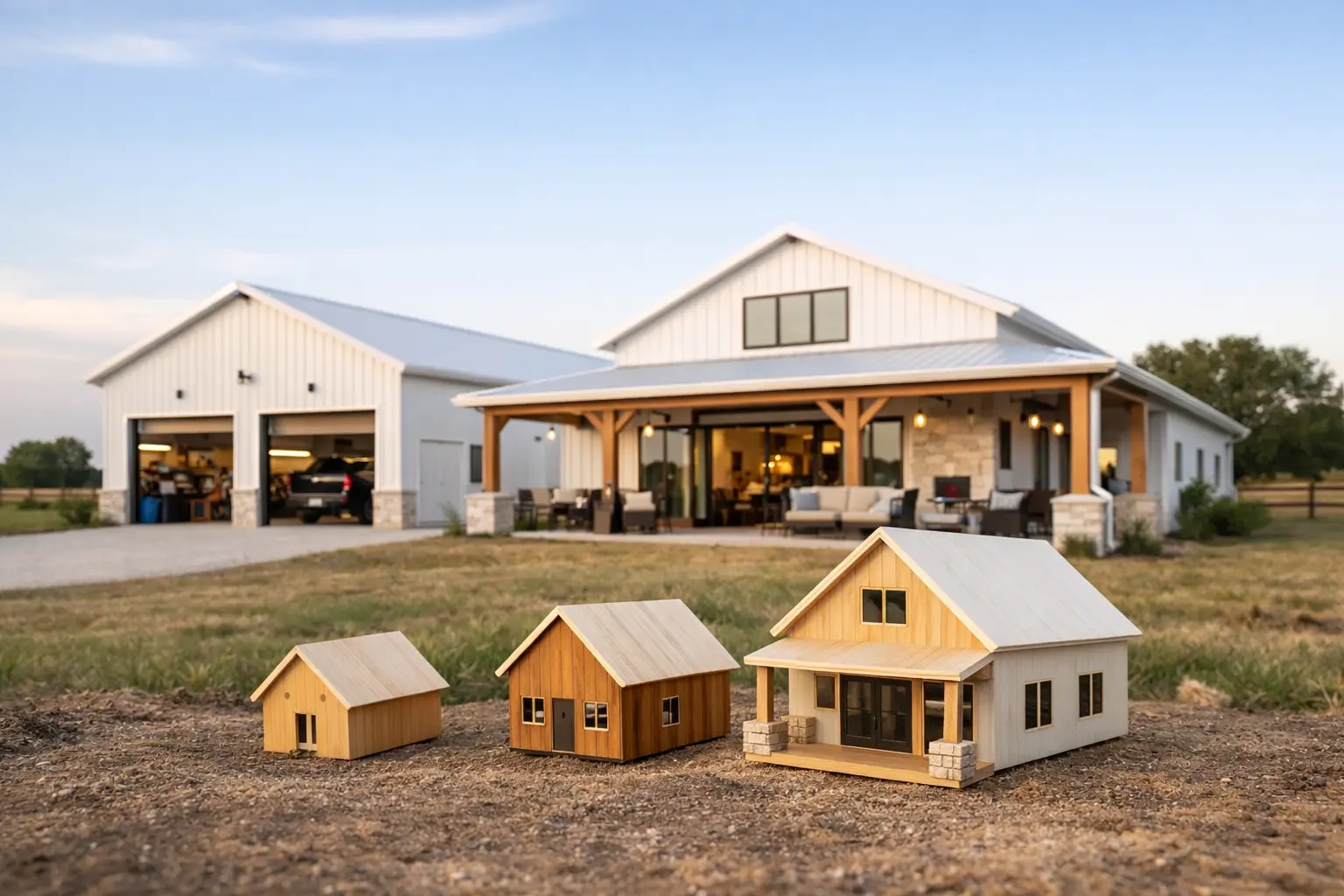
If you’re asking what size barndominium should I build, you’re probably already past the dreaming stage and into real decisions. That is where people either save themselves months of frustration or end up with a floor plan that looks good on paper but lives badly day to day. Size is not just about square footage. It is about how your rooms work together, how much storage you need, whether you want a shop or RV garage, and how long you plan to stay in the home.
The right answer usually starts with a simple reality check. Most buyers do not need the biggest barndominium they can afford. They need the smallest one that fully supports the way they actually live. That difference matters because every extra square foot affects cost, cleaning, furnishing, heating, cooling, and long-term flexibility.
What size barndominium should I build for real life?
A barndominium that feels perfect for one family can feel cramped or wasteful for another. A retired couple with frequent guests might be happiest in a well-designed 1,800 to 2,200 square foot plan with two bedrooms, a flex room, and a generous porch. A family with three kids may need 2,400 to 3,200 square feet to get enough bedrooms, bathrooms, and common space without forcing every room to do double duty.
That is why room count alone is not enough. Two 2,000 square foot plans can live very differently. One may devote more space to oversized hallways, an underused dining room, or a large primary suite. Another may give you a better kitchen, more practical storage, and an open great room that feels larger than the actual numbers suggest.
When choosing size, think in zones. Start with sleeping space, then shared living space, then utility space. After that, decide whether specialty features such as a shop, home office, bonus room, mudroom, covered porch, or RV garage should be included under the same roof.
Start with your household, not your budget ceiling
A common mistake is using the maximum budget as the target size. That sounds logical, but it often leads to a bigger footprint than you need. A better approach is to figure out the smallest comfortable layout first, then see where upgrades actually improve daily life.
For many buyers, a practical range looks like this:
A 2-bedroom barndominium often works well from around 1,500 to 2,200 square feet, depending on whether you want a dedicated office, larger pantry, or more outdoor living space. A 3-bedroom plan often lands between 1,800 and 2,600 square feet. A 4-bedroom layout usually starts around 2,400 square feet and can easily climb past 3,000 if you want larger bedrooms, more bathrooms, or separate living areas.
These are not hard rules. Open concept layouts can make a modest footprint feel much larger. On the other hand, if every bedroom needs a walk-in closet and private bath, your square footage rises fast.
 Browse Floor Plans →
The floor plan matters more than the raw number
This is where barndominium design gets interesting. Square footage is easy to compare, but layout is what determines whether the home actually works.
Open concept barndominiums tend to use space efficiently. You lose fewer square feet to hallways and closed-off rooms, which means a 2,000 square foot plan can feel more useful than a traditional home of the same size. That is one reason so many buyers look at barndominium floor plans under 2000 sq ft first. They often deliver more function than expected.
But there are trade-offs. Open layouts are great for connection and flexibility, but they can be noisier and offer less privacy. If you work from home, homeschool, host extended family, or have teenagers, you may want a little more separation. In that case, adding a flex room, split-bedroom layout, or second living area may be worth the extra square footage.
This is also why browsing a wide mix of layouts before deciding helps so much. Looking at barndominium floor plans and comparing room arrangements side by side is often more useful than guessing from square footage alone.
How shops, garages, and porches change the answer
Many buyers are not just planning a home. They are planning a home plus work space, storage, or hobby space. That changes the size conversation immediately.
If you want a barndominium with shop space, keep the living area and the shop area mentally separate at first. Otherwise, it becomes easy to overbuild the house because the total number sounds justified. A 2,000 square foot living area with a 1,200 square foot shop is very different from a 3,200 square foot home with no shop.
The same goes for garages and RV storage. A standard attached garage may only slightly affect the total footprint, but an RV garage adds serious width, height, and layout considerations. If that feature is part of the plan, it should be treated as a primary design decision, not an add-on.
Porches matter too, especially in states where outdoor living gets used for much of the year. A wraparound porch can reduce the pressure to build a larger interior because it gives you another functional living zone. If you love entertaining or want that indoor-outdoor feel, a smart porch layout may save you from adding interior square footage you do not truly need.
Think five to ten years ahead
The best size is not always the one that fits your life this minute. It is the one that still makes sense after your routine changes.
Maybe you are building for a couple now, but expect kids later. Maybe the kids are leaving soon and you want a layout that will still feel manageable when the house is quieter. Maybe you need one office today, but in three years you will need two. A guest room that doubles as an office can solve that without pushing you into a much larger plan.
This is where flexible floor plans outperform oversized ones. Bonus rooms, lofts, split bedrooms, and simple rectangular layouts often adapt better than highly customized spaces with one very specific purpose.
If resale matters, that flexibility helps there too. In many barndominium markets, especially in places like Texas and Oklahoma, buyers are drawn to plans that feel useful to a wide range of households. Three-bedroom and four-bedroom layouts tend to appeal to more future buyers than a large two-bedroom with highly specialized rooms.
Cost is not just build cost
When people ask what size barndominium should I build, they are usually also asking what size makes financial sense. That answer goes beyond the initial construction budget.
A larger home costs more to finish, furnish, maintain, and operate. More roofing, more flooring, more cabinets, more lighting, more furniture. Even if you can afford the build, you may not enjoy the ongoing costs that come with extra space you barely use.
At the same time, building too small can create expensive regret. If you quickly outgrow the home, the savings disappear. The sweet spot is the plan that gives you enough room for daily comfort and a little future flexibility without loading the design with low-value square footage.
That is why customizable barndominium plans are often the smartest path. You can start with a proven layout and adjust bedroom sizes, add a shop, enlarge the pantry, or rework the garage without reinventing the whole design from scratch.
A practical way to choose your size
Instead of asking how big should the whole building be, ask how each part of the home needs to function.
How many bedrooms do you need full time, not just occasionally? Do you want one living area or two? Is a home office essential? Do you need a large laundry room, mudroom, or walk-in pantry? Will you really use a formal dining area, or would that space work harder elsewhere? Are you planning for vehicles, tools, equipment, or an RV under the same roof?
Once you answer those questions, size gets clearer fast. Most buyers can narrow their ideal range within a few floor plans. If you are torn between two sizes, the better move is usually to choose the stronger layout, not the bigger number.
A well-designed 2,100 square foot barndominium can outperform a poorly planned 2,700 square foot one every single day.
If you are still early in the process, spend time comparing barndominium floor plans by bedroom count, shop options, and overall layout style. That usually reveals whether you need a compact, efficient home, a family-sized plan, or a larger setup with specialty space built in. Turn Key Building Finder is built for exactly that kind of side-by-side plan shopping.
Build for the life you know, leave room for the life you expect, and resist paying for square footage that only sounds impressive on paper.