Last Updated: November 5, 2026
Quick Summary
Learning how to finance a residential industrial hybrid home means choosing between a construction-to-permanent loan, which converts to a standard mortgage after the build, and a standalone construction loan, which requires a separate permanent mortgage later. Start by finding lenders that have funded barndominium or hybrid builds, then prepare stamped plans, a line-item budget, a signed builder contract, and permit evidence before applying.
- Construction-to-permanent loans involve one closing and can save on closing costs.
- Standalone construction loans require paying off the build loan and refinancing into a permanent mortgage.
- Ask lenders whether they have funded barndominium or hybrid builds before.
- Lenders usually need a line-item budget covering foundation, steel erection, insulation, finishes, and site work.
- Gather plans showing the living space and workshop to help the appraiser value the property.
Table of Contents
- What Makes a Residential Industrial Hybrid Home Harder to Finance
- Step 1: Understand the Loan Types Available for Hybrid Homes
- Step 2: Find Barndominium Construction Loan Lenders That Work With Hybrid Builds
- Step 3: Meet Construction-to-Permanent Loan Requirements
- Step 4: Prepare for the Residential Industrial Hybrid Home Appraisal
- Common Financing Mistakes to Avoid
- Get a Free Building Quote to Start Your Financing Plan
- Frequently Asked Questions
Financing a residential industrial hybrid home is harder than financing a standard house, and that surprises many first-time builders who are learning how to finance a residential industrial hybrid home for the first time. Turn Key Floorplans works with homeowners who plan steel-framed barndominiums that include a living space and a workshop. This guide explains the loan options, the steps to secure funding, and the problems you can plan for early.
What Makes a Residential Industrial Hybrid Home Harder to Finance
A residential industrial hybrid home mixes a living area with a commercial-style building shell. Lenders are often more familiar with traditional wood-framed houses, so a mixed-use metal structure can raise questions about value, zoning, and how the building will be appraised.
Lenders typically look at three things:
- Whether the structure qualifies as a residence
- How the building will be valued at completion
- Whether the builder and plans meet local code
Clear documentation answers most of these questions before they become obstacles, and knowing how to finance a residential industrial hybrid home starts with that paperwork. Organizing your plans and builder information in one place can help your lender review the project.
Step 1: Understand the Loan Types Available for Hybrid Homes
Two main loan structures are used for this kind of build. Knowing the difference helps you ask lenders the right questions.
Construction-to-Permanent Loans
A construction-to-permanent loan covers the build phase and then converts into a standard mortgage once construction is finished. You close once, which saves on closing costs and simplifies the process. Complex builds often require specialized financing structures, and navigating the nuances of luxury home construction loans ensures that your project remains financially viable from the initial groundbreaking to the final inspection.
Some borrowers prefer this option because a single loan can cover the project from groundbreaking to move-in.
Standalone Construction Loans
A standalone construction loan pays for the build only. When construction ends, you must pay off the loan, usually by refinancing into a separate permanent mortgage. This means two sets of closing costs and two approval processes.
Standalone loans can make sense if you already own the land outright or expect to refinance later, but they add steps and risk.
The two main loan structures for this kind of build differ mainly in how many times you close and whether you refinance later.
| Loan type | How it works | Key difference |
|---|---|---|
| Construction-to-permanent | Covers the build, then converts to a standard mortgage | One closing saves on closing costs |
| Standalone construction | Pays for the build only, then you pay it off | Requires a separate permanent mortgage |
Step 2: Find Barndominium Construction Loan Lenders That Work With Hybrid Builds
Not every bank understands metal buildings. Start by asking lenders directly whether they have financed barndominium or residential steel-building projects before. Local credit unions and community banks often have more flexibility than large national lenders.
Ask each lender:
- Have you funded hybrid or barndominium construction before?
- What documents do you need from the builder?
- Do you require a specific appraisal type for mixed-use structures?
Keep a short list of lenders who answer these questions clearly. Lenders who seem unsure may slow your project down.
Step 3: Meet Construction-to-Permanent Loan Requirements
Lenders will want proof that the project is sound before they release funds. Expect to provide:
- Finished, stamped building plans
- A detailed construction budget
- A signed contract with a licensed builder
- Proof of land ownership or a purchase agreement
- Evidence of required permits
A common mistake is assuming a builder’s estimate is enough. Lenders usually need a line-item budget that separates the foundation, steel erection, insulation, interior finishes, and site work.
Step 4: Prepare for the Residential Industrial Hybrid Home Appraisal
Appraisals for hybrid homes can be trickier than standard appraisals. The appraiser must decide whether to value the property as a home, a workshop, or both. Comparable sales of similar hybrid properties may be limited in some areas.
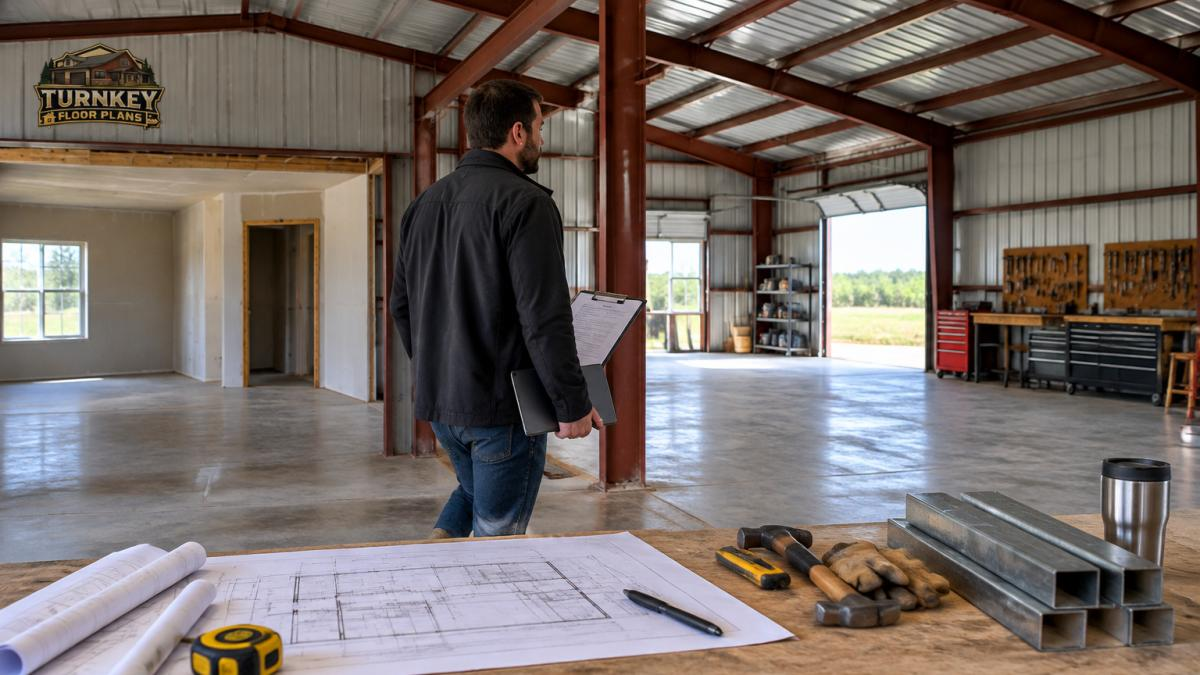
To prepare, gather:
- Complete plans showing the living space and workshop area
- Photos of the site and the building as it progresses
- A list of finishes and upgrades you have chosen
Good documentation helps the appraiser understand what you are building and supports the loan amount you requested.
Common Financing Mistakes to Avoid
Several errors can cause delays or denied loans. Watch for these:
- Choosing a builder before confirming that lenders accept their paperwork
- Underestimating the budget and having no contingency fund
- Starting work before the loan closes
- Mixing residential and commercial terms without clear plans
- Skipping the permit check, which can stall funding
Most of these problems can be avoided by talking to your lender early and keeping every document in one place.
Get a Free Building Quote to Start Your Financing Plan
Financing goes smoothly when your plans, budget, and builder line up from the start. Turn Key Floorplans connects customers with independent professionals. Request a free, no-obligation building quote to get your project scoped out, then use the results to prepare your lender paperwork.
If you are still choosing a layout, you can browse barndominium floor plans from our plan partner. We may earn a commission if you buy through this link.
Frequently Asked Questions
What is the best type of loan to finance a residential industrial hybrid home?
Most owners of a residential industrial hybrid home use a construction-to-permanent loan. It covers the build phase with interest-only draws and then converts to a standard mortgage once the home is finished and inspected. A standalone construction loan works too, but you will need to refinance into a permanent loan later. Because lenders often classify the shop portion as commercial or mixed-use, ask early whether they will finance the full structure under one residential loan.
How is financing a barndominium different from a traditional home loan?
Traditional mortgages assume a conventional wood-framed house on a finished lot. Barndominium financing often involves a steel building, a shop or workspace, and sometimes a site that is still rural. Lenders may ask for a detailed set of plans, a builder’s license and insurance, and a clear budget that separates the residential and workshop areas. Expect more paperwork and a longer approval timeline than a standard home purchase.
Do lenders require specific floor plans for hybrid home financing?
Most lenders want complete, stamped plans that show the residential living space, the shop or garage area, and the structural layout. Plans help the lender estimate the build cost and the appraised value. Some lenders also want to see that the shop space is functional and tied to the home rather than a separate outbuilding. Having professional plans ready before you apply can speed up underwriting.
How much down payment do I need for a hybrid home construction loan?
Down payment requirements vary by lender, loan program, and borrower profile, so there is no single figure that applies to every project. Many construction-to-permanent loans require a meaningful equity contribution, and lenders review your credit, income, and the total project budget before setting terms. Ask each lender for their current requirements in writing so you can compare options accurately.

Leave a Reply