Table of Contents
- Is an Attached RV Garage Worth It for Resale? The Short Answer
- Does an RV Garage Add Value to a Home? What Appraisers Actually Measure
- Attached vs Detached RV Garage: Which One Buyers and Appraisers Prefer
- RV Garage Dimensions for Motorhomes: Getting the Specs Right Before You Build
- Construction Cost vs Appraised Value: The Gap That Decides Your ROI
- Regional Demand and Buyer Pool: Where an RV Garage Pays Off and Where It Doesn’t
- Permits, Zoning, and Insurance: What to Sort Out Before You Break Ground
- When an Attached RV Garage Can Make a Home Harder to Sell
- Frequently Asked Questions
Last Updated: October 15, 2026
Is an Attached RV Garage Worth It for Resale? The Short Answer
Whether an attached rv garage is worth it for resale depends on your local buyer pool, not on the garage itself.
The pattern is consistent: the garage sells when the right buyer shows up, and sits when they don’t.
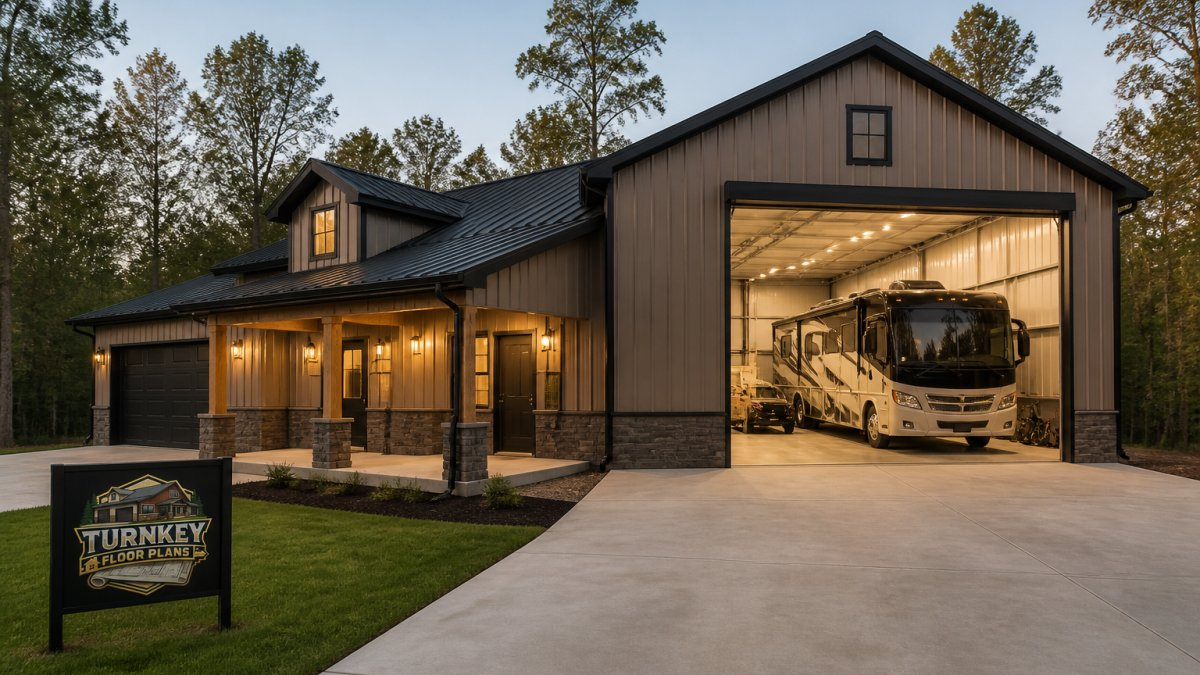
A quick definition before we go further: an attached RV garage is a tall-clearance vehicle bay physically connected to the home’s structure, sharing a wall, roofline, or breezeway rather than standing as a separate building.
An RV garage is a buyer-pool feature, not a universal value feature. Its resale impact is decided by local demand, not by construction quality alone.
Does an RV Garage Add Value to a Home? What Appraisers Actually Measure
Appraisers do not pay extra for a garage because it’s nice. They pay for it when comparable sales in the same market show buyers paying more for that feature.
That distinction matters more than most homeowners expect. An appraiser’s job is to support a value opinion with closed sales, so a feature only contributes value when the local data proves buyers respond to it.
What appraisers typically look at:
- Garage capacity and door height relative to other homes in the price range
- Comparable sales with similar vehicle storage, adjusted for differences
- Functional utility of the bay, including turning radius and ceiling clearance
- Condition and finish compared with the rest of the home
- Market reaction, shown by days on market and buyer feedback
Here’s the part most guides skip: an appraiser can also treat an oversized or highly specialized garage as a superadequacy.
How Comparable Sales and Appraisal Methodology Treat RV Garages
Comparable-sales methodology works by finding closed sales of similar homes and adjusting for differences.
For an RV bay, the comparable pool shrinks fast. Appraisers may have to widen the search radius, extend the time window, or use sales from a different neighborhood entirely. Each of those moves weakens the comparison.
The practical result: RV garage value often gets credited as a modest adjustment, or as no adjustment at all, even when the build cost was substantial.
Building an RV garage on the assumption that the appraisal will match your construction cost is the most common mistake we see. Specialized features frequently appraise below cost, and the gap is yours to cover.
Attached vs Detached RV Garage: Which One Buyers and Appraisers Prefer
Attached RV garages generally appraise and sell better than detached ones, because buyers value direct access to the home. A detached RV bay is a separate structure, and separate structures are often valued more conservatively.
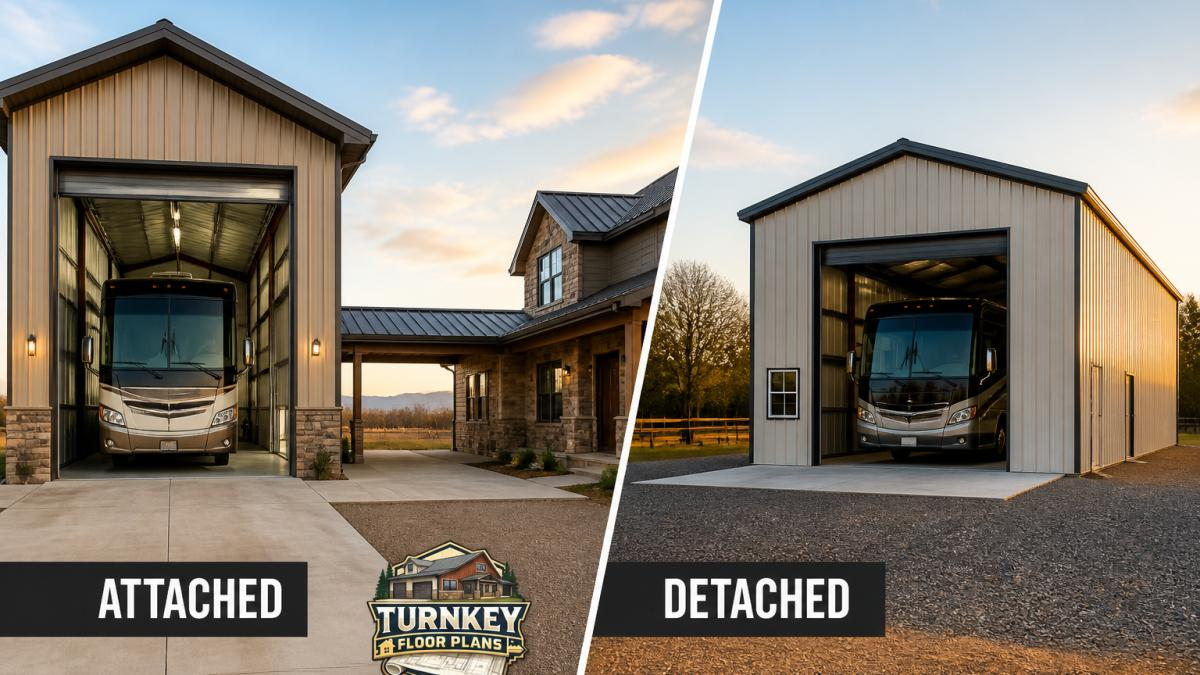
The reason comes down to convenience and weather exposure. An attached bay lets you move between the house and the vehicle without going outside.
Detached garages have their own advantages.
Where Each Configuration Wins
| Configuration | Where It Wins | Where It Falls Short |
|---|---|---|
| Attached RV garage | Buyers who want direct home access; colder and wetter climates; homes where the garage can be integrated into the roofline | Lot constraints and setbacks; can dominate the facade if poorly designed |
| Detached RV garage | Lots where an attached bay won’t fit; homeowners protecting curb appeal; properties with room to build separately | Lower appraiser credit; less convenience; separate structure maintenance |
| Attached with breezeway | A middle ground that keeps some weather protection while separating structures | Still reads as detached to some appraisers and buyers |
For most homeowners building new, we lean toward attached when the lot and budget allow it. The convenience is easier to market, and buyers who own RVs tend to prioritize access over aesthetics.
RV Garage Dimensions for Motorhomes: Getting the Specs Right Before You Build
RV garage dimensions for motorhomes need to account for the vehicle plus clearance on all sides, not just the vehicle itself.
A motorhome is not a car. It’s tall, wide, and slow to maneuver, and it needs room to turn into the bay without scraping.
What to plan for:
- Door height with headroom above the tallest point of the vehicle
- Interior ceiling height that clears roof air conditioners and vents
- Bay width with walking room on both sides for inspection and cleaning
- Bay depth with space in front and behind for access and storage
- Apron and approach with a gradual slope so the chassis doesn’t drag
- Structural clear span so steel columns or posts don’t sit in your turning path
That last point is where red-iron steel construction earns its keep. A clear-span steel frame lets you span the full bay width without interior columns, which is exactly what a long wheelbase vehicle needs.
Walk your planned approach path before you pour concrete. Check the slope from the road to the door, the turning radius from your driveway, and whether overhead lines or trees interfere. Fixing grade after the slab is poured is far more expensive than adjusting it beforehand.
If you’re comparing layouts, our barndominium floor plans include RV garage configurations, and code STOCKPLANSLUKE takes 10% off eligible stock plans.
Construction Cost vs Appraised Value: The Gap That Decides Your ROI
The gap between what an RV garage costs to build and what it adds at resale is the single number that determines whether the project makes sense.
Construction cost for an RV garage depends on size, door type, foundation, insulation, electrical, and local labor rates.
Appraised value, by contrast, is set by the market. It doesn’t care what you paid.
So the honest framing is this: an RV garage is usually a use asset first and an investment second.
Three scenarios to think through:
- You use it heavily and stay long term. The value is in the years of protected storage and convenience. Resale recovery is secondary.
- You use it and sell in a strong RV market. You may recover a meaningful share of the cost, though rarely all of it.
- You build it speculatively in a weak RV market. This is where the money is most likely to be lost.
Where the numbers get interesting is in the cost you avoid. Tools like JD Power’s RV valuation resources and the Good Sam RV Valuator can help you understand what your rig is worth and how condition affects it.
Homeowners who already own a motorhome, plan to stay in the home for several years, and live in a market with other RV owners nearby.
Regional Demand and Buyer Pool: Where an RV Garage Pays Off and Where It Doesn’t
Regional demand decides the outcome more than any design decision. The same RV garage is a strong asset in one market and a liability in another.
Where RV garages tend to perform well:
- Areas with large retiree and snowbird populations
- Markets near lakes, mountains, and major recreation areas
- Rural and semi-rural areas where large lots are common
- Regions where outdoor recreation is a primary lifestyle driver
Where they tend to struggle:
- Dense suburban markets with small lots and strict design review
- Neighborhoods where the dominant buyer is a commuter family
- Areas with high homeowner association restrictions on vehicle storage
- Markets where most buyers have no place to use a large RV
The buyer pool is the mechanism here.
Before you commit, check how many nearby listings mention RV parking or covered RV storage. Our contractor directory can connect you with builders who work in your area and know local buyer expectations.
Permits, Zoning, and Insurance: What to Sort Out Before You Break Ground
Permits, zoning, and insurance need to be resolved before construction, not after.
Zoning and land-use rules govern setbacks, height limits, lot coverage, and whether a large accessory structure is allowed at all.
Homeowner association covenants can be stricter than the local code.
On insurance, tell your carrier before you build.
A practical sequence:
- Confirm zoning allows the structure and check setback and height limits
- Review HOA covenants for vehicle storage and structure restrictions
- Confirm the door height and building height you want are permitted
- Check floodplain, drainage, and grading requirements
- Notify your insurance carrier and adjust coverage
- Pull the permit before any site work begins
Skipping the permit step is the mistake that hurts most. Unpermitted structures create problems at inspection, at appraisal, and at closing.
When an Attached RV Garage Can Make a Home Harder to Sell
An attached RV garage can make a home harder to sell when it dominates the facade, shrinks the usable lot, or prices the home above what the local market supports.
The most common problem is proportion. A massive attached bay can overwhelm the home’s front elevation, and buyers who don’t own an RV see an expensive feature they’ll never use.
The second problem is price.
The third problem is the wrong buyer pool. A home with an attached RV garage is effectively marketed to RV owners.
If you’re planning a build and want a layout that balances RV storage with broad appeal, you can compare designs. Start with a FREE building quote to understand costs in your area, then match a plan to your budget and lot.
The real challenge with an attached RV garage isn’t building it well. It’s building the right one for the market you’ll eventually sell into. Turn Key Floorplans helps you get that decision right before you commit, with customizable barndominium floor plans organized by bedroom count, square footage, and features like RV garages, plus a network of general contractors who specialize in metal buildings and can serve your state.
Frequently Asked Questions
Is a garage a good investment for resale?
It depends on the type and your local market. A standard two-car garage consistently ranks among the features buyers expect, and appraisers can usually find comparable sales to support its value. An attached RV garage is a different story. Because fewer homes have them, appraisers may struggle to find comps, which can leave part of your construction cost out of the appraised value. In markets with strong RV ownership, the premium is easier to document. In markets without that demand, you may recover only a portion of what you spent.
Does an attached RV garage add resale value?
It can, but not automatically. An attached RV garage adds resale value when three conditions line up: your local market has enough RV owners to create buyer demand, the garage is sized and equipped so a motorhome actually fits and turns easily, and an appraiser can find comparable sales with similar storage. When those conditions are missing, the garage may still be a strong personal asset while contributing little to the appraised price. Get a FREE building quote to understand what the structure itself will cost before you weigh it against expected resale.
Do buyers prefer an attached or detached RV garage?
Buyers generally prefer attached RV garages when the layout keeps the home’s living space intact and the garage door faces away from the main entry. Attached storage means no walking outside in bad weather, and it often reads as part of the home rather than an outbuilding. Detached RV garages appeal to buyers who want to keep noise, fumes, and shop work away from the house, or who plan to use the space commercially. Neither option wins universally, so match the choice to how buyers in your area actually use their properties.
What RV garage dimensions for motorhomes should I plan for?
Start with the length and height of the largest motorhome you might own, then add clearance for walking around it, opening bay doors, and pulling in at an angle. Height matters as much as length: Class A coaches with roof-mounted air conditioners need substantial vertical clearance, and a standard residential garage door will not work. Width should allow the door to open fully on both sides. Confirm your specific coach measurements before finalizing plans, and ask your builder to account for the door track and header depth.
Can an RV garage make a home harder to sell?
Yes, in certain markets. A very large attached RV garage can consume square footage that would otherwise become living space, which narrows your buyer pool to people who own or plan to own an RV. If your area has few RV owners, the feature can sit on the market longer than comparable homes without it. The risk grows when the garage is oddly proportioned or blocks natural light into the main house. A well-integrated design that keeps living space functional limits this downside considerably.
Leave a Reply