Last Updated: November 5, 2026
Quick Summary
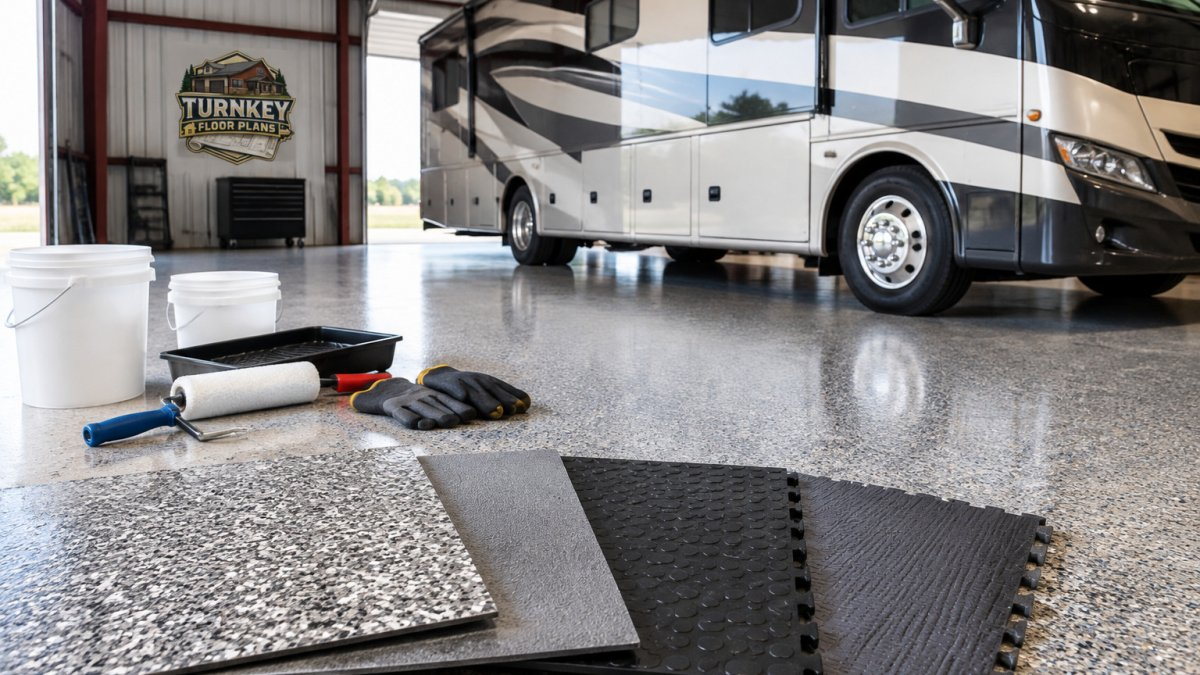
The best rv garage flooring depends on how the bay is used, but coated or sealed concrete gives the strongest mix of durability and easy maintenance. Epoxy suits most vehicle bays when specified for vehicle traffic and prepped correctly, polished concrete suits clean workshop garages, and vinyl and hardwood belong in living areas.
- Sealed concrete is the most common starting point and the lowest-cost finish that still protects the slab.
- Epoxy works well for vehicle bays only when specified for vehicle traffic and the slab is prepped correctly.
- Test slab moisture and ask for the result before any coating goes down.
- Polished concrete needs a densifier or sealer and an installer’s plan for slip resistance.
- Keep luxury vinyl and hardwood out of the vehicle bay and use them in the living space.
Table of Contents
- Why RV Garage Flooring Needs More Than a Standard Floor
- Sealed Concrete for Barndominium Garages
- Polished Concrete Garage Floor: Strengths and Trade-Offs
- Epoxy Flooring for RV Garages: Coating Options Compared
- Stained Concrete, Luxury Vinyl, and Hardwood: Where They Fit
- Slab Preparation, Climate, and Chemical Resistance
- Choosing the Right RV Garage Floor for Your Build
- Frequently Asked Questions
Why RV Garage Flooring Needs More Than a Standard Floor
An RV garage floor carries far more than a family car. A motorhome can weigh several tons, and its weight rests on a few tire contact points that concentrate load on the surface beneath. Oil drips, road salt, tire residue, and the occasional spilled cleaning fluid all find their way onto the slab over time.
That is why the floor deserves the same planning attention as the building shell. Choosing the floor early lets you plan slab thickness, drainage, and finish together.
Most rv garage flooring options fall into a few families: sealed concrete, polished concrete, epoxy coatings, and stained concrete. Vinyl and hardwood have a place too, but usually in the living areas next to the garage rather than in the bay itself. The sections below compare these options so you can match the floor to how you will actually use the space.
Sealed Concrete for Barndominium Garages
Sealed concrete is the most common starting point for an RV garage. The bare slab is poured, cured, and then coated with a penetrating or film-forming sealer that resists stains and moisture.
A sealer is usually the lowest-cost finish that still protects the slab. It does not add much visual character, but it makes cleanup far easier.
Sealers need periodic reapplication under heavy traffic, and a worn sealer lets oil and salt soak into the slab. Plan a maintenance schedule from the start.
Polished Concrete Garage Floor: Strengths and Trade-Offs
Polished concrete is ground and buffed to a smooth, reflective finish. For a garage that doubles as a workshop, it offers a clean look and a surface that resists dust and wear well.
The trade-offs are real. Polishing is a specialized process, the finish can show hairline cracks in the slab, and a glossy surface can become slippery when wet. Polished concrete also needs a densifier or sealer to hold up against oil and road salt. Ask any installer how they will handle slip resistance before you commit.
For RV owners, polished concrete is a strong option if the slab is in good shape and you want a finish that cleans up quickly.
Epoxy Flooring for RV Garages: Coating Options Compared
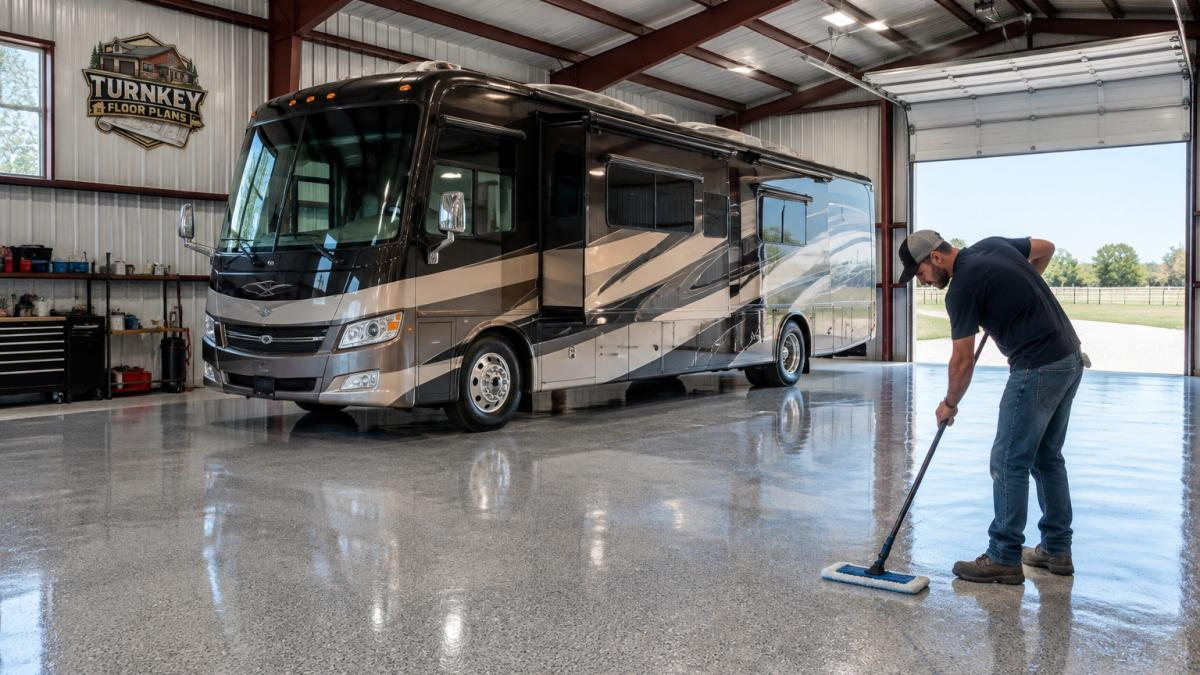
Epoxy is a thermosetting resin that bonds to a properly prepared concrete surface and cures into a hard, chemical-resistant film. For an RV bay, it is often the best balance of protection, cleanability, and appearance, but only when the system is specified for vehicle traffic and the slab is prepped correctly. A thin hardware-store kit and a garage-grade coating system are not the same product.
The main epoxy systems you will see
- Solid-color epoxy coatings. A base coat plus optional topcoat, usually applied at a total film build in the range most manufacturers specify for garages (commonly around 8 to 12 mils, though products vary). Good general protection and easy to sweep or wash.
- Metallic epoxy. A pigmented base with metallic powders that flow into a swirled pattern, usually topped with a clear polyurethane or polyaspartic coat. Attractive in a garage that opens to living space, but the decorative layer is not what provides wear resistance, so the topcoat matters.
- Epoxy with a broadcast aggregate. Silica sand or flake broadcast into the wet base coat creates a textured, slip-resistant surface. This is the version most worth considering in a wash-down or wet-climate RV bay.
- Epoxy mortar or high-build systems. Thicker builds used to rebuild worn or spalled concrete before a topcoat. These cost more and are usually installed by specialty crews.
Why preparation decides the outcome
Epoxy does not bond to dust, curing compounds, sealers, or a slick, power-troweled surface. The standard prep is mechanical abrasion, usually diamond grinding or shot blasting, followed by crack and spall repair and a moisture test. Acid etching is not a substitute for mechanical profiling on a garage slab.
Watch out: A coating applied over a slab with high moisture vapor emission will blister or peel from below, no matter how good the resin is. Ask the installer for the moisture test result before any coating goes down.
Performance under RV loads and hot tires
An RV concentrates load at a handful of tire contact patches, and a loaded motorhome can put far more pressure on the slab than a passenger car. Epoxy does not add structural capacity to the slab, so slab thickness, reinforcement, and base preparation still carry the load. What the coating does is resist abrasion, tire marks, and chemical attack at the surface.
Hot tires are a known weak point for inexpensive coatings. A tire that has just run at highway speed can soften a low-grade epoxy and leave a permanent imprint or pull the film. Look for a product labeled for vehicle traffic and, where the budget allows, a polyaspartic or polyurethane topcoat, which generally handles hot-tire contact and UV exposure better than a bare epoxy topcoat.
Chemical and road-salt resistance
Epoxy handles many fuels, oils, and coolants well, but resistance varies by product. Road salt brine, battery acid, brake fluid, and some solvents are harder on coatings. Check the manufacturer’s chemical resistance chart for the specific fluids you expect, and clean spills promptly rather than letting them sit.
Maintenance and repairability
A coated floor is repairable in patches, which is one of its practical advantages. High-traffic lanes and the area under the RV’s tires may eventually show wear or chipping; a patch kit and a recoat of the affected area usually restores it. Plan on recoating a working garage floor periodically depending on traffic, and keep touch-up material on hand.
Where epoxy fits in a barndominium
Epoxy is a strong choice for the vehicle bay, a workshop zone, and a wash-down area. It is a poor choice for a slab that has not cured, has active moisture problems, or was previously sealed. If you want the same look to flow into a connected living area, keep the epoxy in the garage and use a different floor on the interior side of the door.
The four main epoxy systems differ mainly in look, slip resistance, and how much build-up they need.
| System | Best for | Key difference |
|---|---|---|
| Solid-color epoxy coating | General vehicle bay protection | Good protection, easy to sweep or wash |
| Metallic epoxy | Garages opening to living space | Decorative swirl; topcoat matters for wear |
| Epoxy with broadcast aggregate | Wash-down or wet-climate bays | Textured, slip-resistant surface |
| Epoxy mortar or high-build system | Rebuilding worn or spalled concrete | Thicker build; usually specialty crews |
Stained Concrete, Luxury Vinyl, and Hardwood: Where They Fit
Stained concrete adds color to the slab through acid or water-based stains, giving a mottled, natural look. It suits a garage that opens onto living space and where appearance matters. Stain is a surface treatment, so it still needs a sealer on top to protect against oil and salt.
Luxury vinyl plank (LVP) is a resilient option that comes in wood- and stone-look styles, and it can be a comfortable choice for a connected living area. It is not a good fit for a vehicle bay. Heavy tires, hot tire contact, and fluids can damage it, and it can lift if the slab moisture is not controlled.
Rustic hardwood gives interior rooms a warm finish but does not belong in a garage that houses a motorhome. Keep wood flooring out of the bay and use it in the living space instead.
We recommend drawing a clear line between the vehicle bay and the living area, and choosing a different floor for each.
Slab Preparation, Climate, and Chemical Resistance
Whatever finish you choose, the slab underneath decides how well it performs. Start with a properly graded, well-compacted base and a slab thick enough for the load of a loaded RV. Your builder should confirm the slab design, reinforcement, and drainage with local requirements.
Climate matters as well. Cold climates benefit from a moisture barrier under the slab and from planning for heated concrete if you plan to work in the bay through winter. In wet regions, watch for moisture vapor rising through the slab, which can lift adhesives and coatings.
Chemical resistance is a practical concern. Road salt, antifreeze, brake fluid, and cleaning products all attack some finishes. Choose a coating rated for those chemicals, and clean spills promptly. Garage-specific safety also includes slip resistance, so pair a smooth finish with a sealed or textured area near the entry and wash station.
Choosing the Right RV Garage Floor for Your Build
Start by listing how the space will be used: parking an RV, storing tools, working on vehicles, or hosting guests. Then match the floor to that use.
For most RV owners, a coated or sealed concrete floor gives the best mix of durability and easy maintenance. Polished concrete suits a workshop-focused garage with a clean slab, while stained concrete works where looks count. Keep vinyl and hardwood in the living areas.
Before you decide, ask your builder for the slab specification, the coating product data, and the maintenance plan. If you want help mapping the RV bay alongside the rest of your layout, get a free building quote from our team, who can walk through the options with you. You can also browse barndominium floor plans with an RV garage and save 10% with code STOCKPLANSLUKE. We may earn a commission if you buy through this link.
Related reading: For a broader guide to picking a floor for an RV garage, see How to Choose the Best Flooring for an RV Garage. Compare stained concrete costs and layout planning in our guide to stained concrete floors for barndominiums.
Frequently Asked Questions
What is the best flooring for a barndominium RV garage?
For most owners, a sealed or coated concrete slab is the most practical choice for an RV garage. Concrete handles heavy vehicle loads, resists the oil and fluid drips common in garages, and can be finished in several ways. Sealed concrete is the lowest-cost option, polished concrete offers a clean, low-maintenance surface, and epoxy coatings add chemical and stain resistance. Living areas attached to the garage can use luxury vinyl plank or hardwood for comfort, but the vehicle bays themselves usually perform best on a finished concrete slab.
Is polished concrete a good choice for an RV garage?
Polished concrete can work well in an RV garage because it uses the slab you already have as the finished floor. It is dense, easy to sweep, and reflects light well, which helps in a shop-style space. Its trade-offs are that it can show stains from oil or road salt unless it is sealed properly, and it may feel hard underfoot during long work sessions. Ask your contractor about the polishing and densifying process and whether a protective sealer is included.
Should I seal the concrete floor in my RV garage?
Yes, sealing is strongly recommended for an RV garage floor. A penetrating or topical sealer reduces moisture absorption and makes oil, antifreeze, and road salt easier to wipe up before they stain. Sealers need periodic reapplication, so plan for maintenance as part of your ownership costs. Confirm with your concrete contractor which sealer suits your slab and vehicle use before the floor is finished.

Leave a Reply