Last Updated: November 24, 2026
Quick Summary
The best insulation for metal building walls and roof is a layered assembly rather than one product: fiberglass blanket or batt in the cavities, continuous rigid board over purlins and girts to break thermal bridging, and a vapor retarder on the warm side. For humid or airtight builds, closed-cell spray foam replaces the cavity fill.
- Purlins and girts conduct heat through the cavity, so effective R-value lands below the product rating.
- Closed-cell spray foam blocks air and vapor movement and is commonly chosen for humid climates.
- Open-cell foam absorbs moisture and needs a separate vapor retarder in cold assemblies.
- Install a vapor retarder on the warm side, fill the purlin cavity without compressing it, then add rigid board.
- For a shop or garage, fiberglass blanket with a faced vapor retarder usually controls condensation at far lower cost.
Table of Contents
- Best Insulation for Metal Building Walls and Roof: What Actually Works
- Metal Building Insulation R-Value Requirements by Climate
- Fiberglass vs. Spray Foam for Metal Buildings: Which Fits Your Walls
- How to Insulate a Metal Building Roof From the Inside
- Comparing Insulation Materials: Pros, Cons, and Where Each Fits
- Best Insulation for Metal Building Walls and Roof: Matching Material to Building Use
- Where to Go From Here
- Frequently Asked Questions
Best Insulation for Metal Building Walls and Roof: What Actually Works
The best insulation for metal building walls and roof depends on the assembly, not a single product. Steel purlins, girts, and fasteners conduct heat through every cavity, so batts alone underperform if the frame stays exposed.
Three families cover most projects: fiberglass blanket and batt systems, spray foam, and rigid board with a reflective or radiant component. Fiberglass handles cost and code compliance, spray foam handles air sealing and condensation, and rigid board handles continuous thermal breaks over framing.
| Insulation Type | Best For | Main Strength | Main Weakness |
|---|---|---|---|
| Fiberglass blanket and batts | Budget wall and roof cavities | Low installed cost, familiar to crews | Poor air sealing, compresses easily |
| Spray foam | Air sealing and moisture control | Fills gaps, stops air leakage | Highest installed cost, needs a specialist |
| Rigid board | Continuous coverage over purlins and girts | Breaks thermal bridging | Seams need careful sealing |
| Reflective and foil-bubble | Radiant heat control in warm climates | Thin profile, retrofit-friendly | Weak on its own as a cavity fill |
| Loose-fill | Flat ceilings in finished spaces | Fills irregular areas | Not suited to vertical wall cavities |
Metal Building Insulation R-Value Requirements by Climate
R-value requirements come from the energy code your local jurisdiction adopts, not a single national number. Local energy codes set the targets for each climate zone, so confirm the edition your jurisdiction has adopted.
Cold climates push roof R-values higher than walls because heat rises. Hot climates shift priority toward radiant heat gain and air sealing. Mixed climates need whole-assembly performance over any single product rating.
Buying insulation to hit one label number while ignoring the steel frame is a common mistake. Purlins and girts conduct heat straight through the cavity, so effective R-value lands below the product rating.
Budgeting insulation inside the full project is easier with realistic figures. What a metal building costs breaks down kits, concrete, labor, and turnkey ranges so insulation can be planned as a line item rather than an afterthought.
Fiberglass vs. Spray Foam for Metal Buildings: Which Fits Your Walls
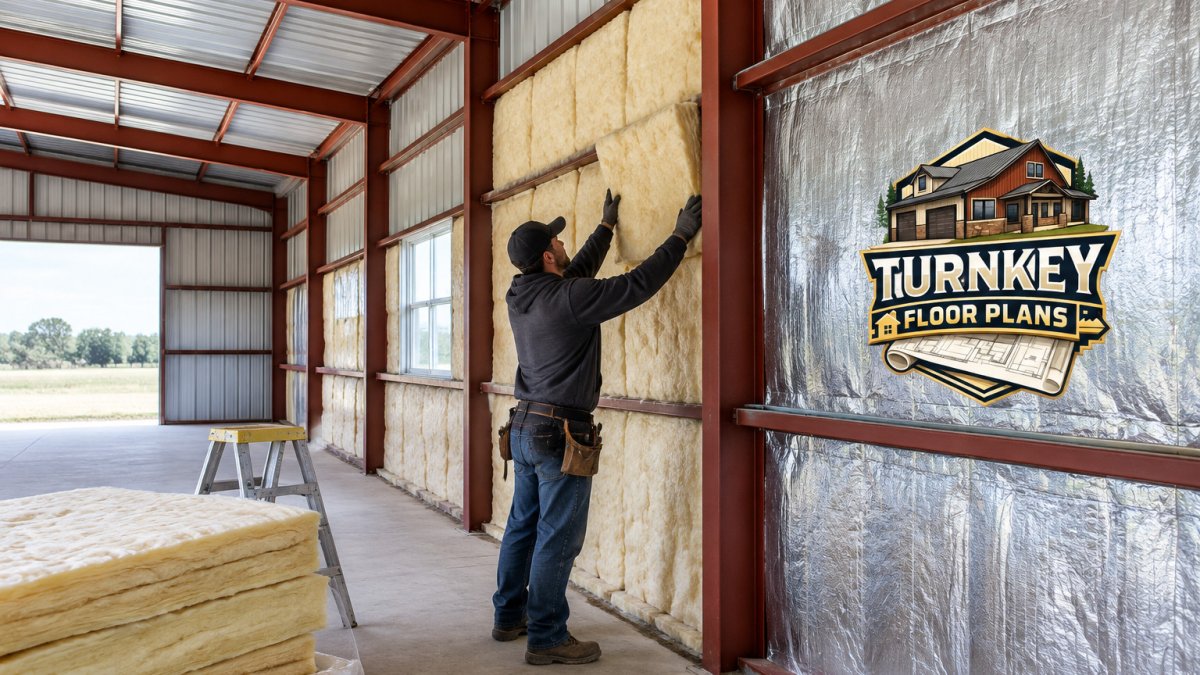
Fiberglass blanket systems, often called metal building insulation, span between girts and purlins with a facing that acts as a vapor retarder. Installation is fast, the material is non-combustible, and most crews know it well.
Closed-cell spray foam blocks air and vapor movement and is commonly chosen for humid climates.
- Choose fiberglass when budget drives the decision and walls get a proper vapor retarder.
- Choose closed-cell foam in humid climates or where the building must be airtight.
- Choose open-cell foam for sound control with a planned vapor strategy.
- Watch out: skipping air sealing around penetrations undoes most of the benefit of either material.
Spraying foam over a dirty or damp substrate is another common mistake. Adhesion fails, voids form, and the assembly performs worse than plain batts.
For a deeper cost-and-value comparison before committing, is spray foam insulation worth it for metal homes walks through where the premium pays back and where it does not.
How to Insulate a Metal Building Roof From the Inside
Insulating a metal roof from the inside means controlling three things at once: heat transfer through the purlins, condensation on the underside of the roof panel, and air movement through the assembly. Miss any one and the roof sweats.
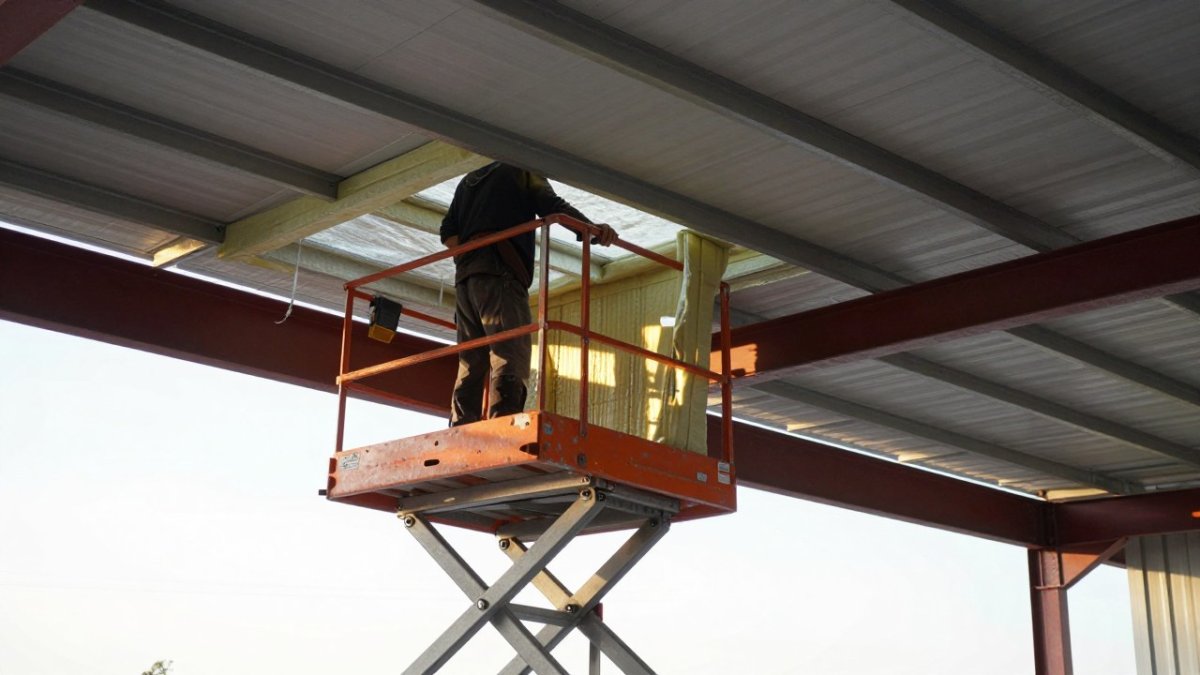
- Install a vapor retarder on the warm side, facing the conditioned space.
- Fill the purlin cavity with fiberglass blanket or batt insulation without compressing it.
- Add continuous rigid board beneath the purlins where thermal bridging needs breaking.
- Seal every penetration, ridge, and eave with compatible tape or sealant.
- Verify ventilation or a sealed assembly strategy before closing up the ceiling.
Compression is the quiet killer. Pushing blanket insulation tight against the purlin squeezes out the air that gives it R-value, and over-fastening the facing flattens the blanket and creates gaps at every support.
Retrofit work adds constraints. Existing purlins may not accept a full blanket thickness, and adding rigid board changes ceiling height. Measure before ordering.
Once the roof assembly is closed, the interior finishes decide how the space feels. Metal building home interior design ideas covers ceiling lines and wall surfaces that work with exposed structure rather than fighting it.
Comparing Insulation Materials: Pros, Cons, and Where Each Fits
No single material covers every surface well.
Fiberglass batts and rolls remain the default for wall cavities because they are inexpensive, non-combustible, and widely available. Spray foam earns its cost in tight, humid, or irregular assemblies.
Whole-assembly performance beats any single rating. A wall with modest batts, sealed penetrations, and continuous board usually outperforms a wall with premium foam and unsealed gaps.
For readers planning a living space rather than a shop, barndominium insulation that works best compares these options across the whole build, and which insulation is best for a metal barndominium focuses on conditioned living areas.
Best Insulation for Metal Building Walls and Roof: Matching Material to Building Use
Building use changes the recommendation more than climate does. A conditioned home needs a full vapor strategy and continuous insulation. An unconditioned workshop needs condensation control and nothing more.
For a residence, the best insulation for metal building walls and roof is a layered system: closed-cell foam or sealed fiberglass in the cavities, rigid board over the framing, and a continuous vapor retarder on the warm side.
Lifecycle cost favors the tighter assembly. Reducing air leakage generally lowers heating and cooling demand, so the tighter assembly is worth considering in the initial budget.
Watch out: mixing vapor strategies, such as a vapor retarder on both sides of a wall, traps moisture inside the assembly. Pick one side and stay consistent.
Where to Go From Here
Insulation decisions get easier once the building type, climate, and budget are fixed. Turn Key Floorplans connects homeowners with independent general contractors who work in metal buildings and barndominiums, and organizes floor plan options by bedroom count, square footage, and features.
Get a free building quote and start with a realistic budget for the walls, roof, and insulation together.
Insulation is the line item most often cut and most often regretted. The right assembly keeps a metal building comfortable, dry, and efficient for decades. Turn Key Floorplans helps homeowners compare floor plans, understand construction costs, and connect with independent contractors who specialize in metal buildings and barndominiums.
Frequently Asked Questions
What is the best insulation for a metal building roof?
Fiberglass blanket insulation with a vapor retarder facing is the most common choice for metal building roofs because it fits between purlins and controls condensation. Spray foam performs better in humid climates and seals air leaks, but it costs more and makes future roof repairs harder. Rigid board works well when you need a flat interior finish. The right pick depends on your climate, budget, and whether the building is new construction or a retrofit.
Can batt insulation be used in a metal building?
Yes. Fiberglass batts and rolls are widely used in metal building walls, especially when the wall cavity is deep enough to hold the batt without compressing it. The catch is air and moisture control: you need a continuous vapor retarder and careful sealing around girts, purlins, and openings. Compressed batts lose R-value, so match the batt thickness to the cavity depth and avoid stuffing it behind wiring or bracing.
How does insulation help control condensation in a metal building?
Condensation forms when warm, moist air meets a cold metal surface. Insulation keeps the interior face of the metal closer to room temperature, and a vapor retarder stops moisture from reaching the cold side. Spray foam also seals air leaks that carry humidity into wall and roof assemblies. Without both insulation and moisture control, you risk dripping ceilings, rusted fasteners, and wet insulation that loses performance.

Leave a Reply